Hydro Jetting in Sarasota, FL
Hydro jetting scours the inside of your sewer line with pressurized water, stripping away grease, mineral scale, and settled sand that a drain cable can only punch through. It is the deepest cleaning a sewer pipe can get without replacing it.
How Hydro Jetting Works
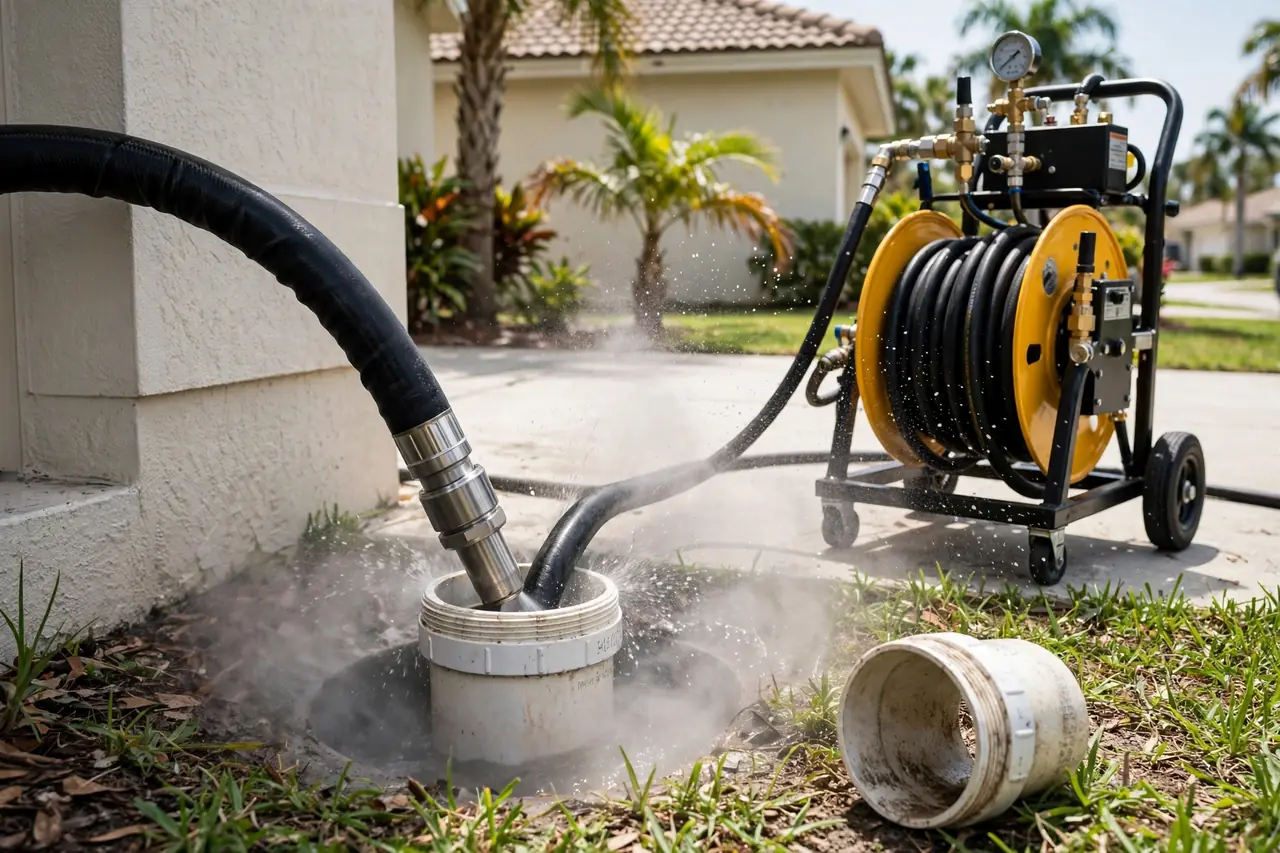
Hydro jetting uses a specialized nozzle fed by a high-pressure hose. Water enters through the hose and exits the nozzle in two directions at once: forward-facing jets break up the blockage ahead, while rear-facing jets blast the pipe walls clean and pull the nozzle forward through the line. The result is a pipe that is scrubbed wall to wall, not just opened at the center.
Unlike a snake, which cuts a narrow path through a clog, jetting returns the pipe to nearly its full original diameter. That difference matters in Sarasota, where the recurring problems are not single clogs but buildup that coats the entire length of the line. Call (941) 344-0088 if your drains have been slowing down again after a recent snaking.
What Hydro Jetting Removes
Most sewer blockages in Sarasota homes fall into three categories, and jetting handles all three better than any other cleaning method.
Grease and Soap Buildup
Kitchen drains send grease down the line every day. In a main sewer line, that grease cools, hardens, and traps everything else that passes. Over time it narrows the pipe from the walls inward, exactly where a snake cannot scrape it all away. Jetting melts and strips grease off the walls in a single pass.
Cast-Iron Scale and Corrosion
Many Sarasota homes built between the 1960s and 1980s, the big slab subdivisions around Gulf Gate and Bee Ridge, have cast-iron drain piping under the slab. As cast iron ages, its interior roughens with corrosion scale that snags paper and waste. A snake rattles through scale; jetting scours it off and smooths the interior, which is why jetting often buys aging cast-iron lines more useful years.
Settled Sand and Silt
Sarasota sits on Myakka fine sand, and when a lateral joint separates after soil saturation, fine sand washes into the pipe and settles at low spots. Snakes pass right over a sand bed. Jetting suspends that sand in the water stream and carries it out of the line. If your home has a history of repeat blockages after heavy rain, sand intrusion is a likely suspect, and jetting is the fix a cable cannot deliver.
Hydro Jetting vs Drain Snaking
Snaking is a cable with a cutting head that bores a hole through a blockage. It is fast, inexpensive-feeling, and useful for a one-time obstruction like a flushed object. Its weakness is that it only restores partial flow. Whatever lines the pipe walls stays there, so the same line clogs again, often within months.
Jetting cleans the entire circumference of the pipe. It does not just open a path; it resets the line. For a homeowner, the practical difference is the interval between service calls. A snaked grease line may need attention again next season. A jetted line, with normal use, can run clear for years. That is why snaking is a rescue and jetting is a restoration.
The two methods are not rivals so much as different tools for different problems. A cable is right for a solid object or a hard obstruction you can see on camera. Jetting is right for buildup, the slow, whole-pipe narrowing that makes every drain in the house sluggish at once. A sewer camera inspection shows which problem you actually have before any cleaning begins.
When Hydro Jetting Is the Right Call
Jetting earns its keep when the problem is material coating the pipe rather than damage to the pipe itself. The clearest sign is repeat trouble: you have had a line cleared before and it slowed down again in under a year. Another is pattern behavior, drains that gurgle, multiple fixtures backing up at low points, or a toilet that needs a second flush on ordinary days.
Jetting is also the right preparatory step before trenchless repairs. CIPP pipe lining and pipe bursting both require a clean host pipe, and jetting is how that cleaning happens. It is likewise the standard answer after root cutting: once roots are mechanically removed, jetting flushes the remaining fibers and root hairs so they do not become the seed of the next mass.
Restaurants and commercial kitchens in Sarasota are another natural fit. Grease lines in a food-service lateral can narrow dramatically between cleanings, and scheduled jetting keeps them at full diameter instead of waiting for the backup that closes a dining room.
When the Pipe Needs Replacement Instead
Jetting cleans pipes; it does not repair them. There are conditions where no amount of water pressure is the answer, and knowing the difference saves you from paying for cleanings that cannot last.
A collapsed section of pipe cannot be jetted back into shape. Neither can a belly, a sagging low spot caused when saturated sandy soil loses support under the line, because water alone cannot lift settled pipe back to grade. Jetting will clear the debris sitting in a belly, but the sag remains and the debris will return. A broken or offset joint that has separated beyond what the water can pass will not be rejoined by pressure.
Structurally failed cast iron is the other limit. When corrosion has eaten through the bottom of a pipe under the slab, jetting can expose holes that were plugged by scale. This is not the jetting causing damage, the damage was already there, but it is why jetting should always follow a camera inspection, never precede it. If the camera shows a pipe that is cracked, collapsed, or bellied, the honest answer is repair or replacement, not another cleaning. See trenchless sewer repair and sewer line replacement for what comes next.
The Jetting Process Step by Step
A proper hydro jetting service in Sarasota follows the same sequence every time, and skipping steps is how lines get damaged or cleanings get wasted.
Step One: Camera Inspection
The line is located, accessed through a cleanout, and inspected with a sewer camera from end to end. The inspection answers two questions: is the pipe structurally sound enough to jet, and what exactly is the buildup? Jetting blind into a collapsed clay lateral or a shattered cast-iron joint can push water where it does not belong.
Step Two: Selecting the Nozzle and Pressure
Different nozzles serve different jobs. Penetrating nozzles punch through heavy grease plugs; rotating nozzles scour walls; root-cutting heads handle remaining root fiber. Pressure is matched to the pipe material and condition, what a sound PVC lateral can take is different from what a corroded cast-iron line under a Gulf Gate slab should receive.
Step Three: The Cleaning Pass
The nozzle works from the downstream end back toward the access point, flushing debris out with it rather than pushing it deeper. Grease, scale, sand, and root fiber all ride the flow out of the line. On long laterals this can take a while; thoroughness matters more than speed.
Step Four: Verification on Camera
The line is re-inspected after jetting. This final camera pass confirms the walls are clean and, just as important, gives you a clear view of the pipe's true condition with the buildup gone. Many homeowners first learn their pipe has a belly or a separated joint during this after-jetting inspection, exactly the information needed to plan the right long-term fix.
Hydro Jetting in Sarasota Conditions
Sarasota's soil and water shape how jetting is used here. The seasonally high water table, often just a few feet below the surface, means cracked laterals admit groundwater and with it fine sand from the surrounding Myakka sand. Over time that sand forms a bed inside the pipe that snakes skate over. Jetting is the only cleaning method that reliably removes it.
The rainy season from June through September makes everything worse. Saturated soil loses support under pipes, joints shift, and sand washes in through newly opened gaps. It is common for Sarasota homeowners to first notice slow drains in August, the wettest month, when groundwater pressure is at its peak. Jetting after a separated joint is repaired restores the line to full capacity instead of leaving the sand bed behind.
In the 1960s to 1980s slab neighborhoods, the combination of cast-iron piping and decades of scale makes jetting a recurring maintenance tool. The pipe interiors in these homes are rough by nature at this age, and roughness invites new buildup. Periodic jetting keeps those interiors as smooth as the pipe allows and stretches the years before lining or replacement becomes unavoidable.
Keeping Your Line Clear Between Services
Jetting resets a sewer line, but what goes down the drains afterward determines how long it stays clean. Grease is the single biggest controllable factor, pour cooking grease into a container and trash it, not down the sink. Flushable wipes are the other repeat offender; despite the name, they do not break apart and they combine with grease into stubborn masses.
Tree placement matters too. Mature live oaks and ficus trees send roots toward the moisture inside sewer laterals, and roots regrow after cutting. If your line runs through root-prone landscaping, expect jetting or root service on a schedule rather than once. Finally, if every fixture in the house slows at the same time after a heavy rain, do not just wait for it to dry out, that pattern points to infiltration through joints or cracks, and a camera inspection plus jetting will tell you whether it is buildup, damage, or both. Call (941) 344-0088 and we will start with the camera.
Hydro Jetting Across Sarasota
We bring hydro jetting to homes throughout Sarasota and nearby Gulf Coast cities.
Related Reading
Hydro Jetting vs. Snaking: Clearing Sarasota Sewer Lines
Hydro jetting vs snaking for Sarasota sewer lines: grease, scale, sand and root scenarios explained. Call (941…
Learn more →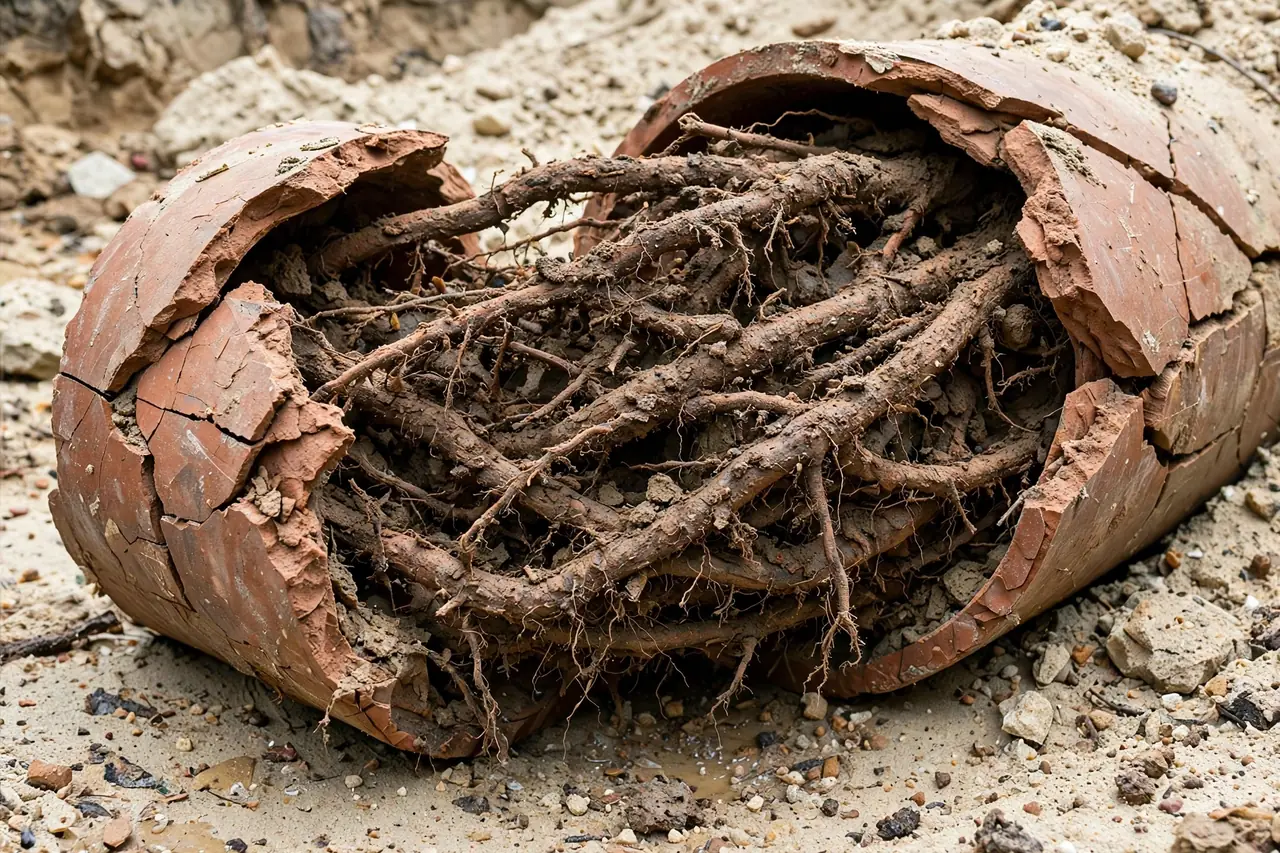
Tree Roots in Sewer Lines: A Sarasota Homeowner's Guide
Tree roots invade Sarasota sewer lines through clay and cast-iron joints. Signs and fixes explained. Call (941…
Learn more →Frequently Asked Questions
Is hydro jetting safe for older pipes?
It is safe when the pipe has been inspected on camera first and the pressure is matched to the pipe's material and condition. Sound cast iron, clay, and PVC all jet cleanly. A collapsed section, a badly bellied run, or paper-thin corroded cast iron should be repaired first, jetting cleans structure, it does not create it. That is why we camera-inspect before every jetting job.
How is jetting different from having my line snaked?
A snake bores a hole through the center of a blockage and leaves the buildup on the pipe walls untouched, so the same line typically clogs again sooner. Jetting scours the full circumference of the pipe and returns it to nearly its original diameter. Snaking is a rescue for a single obstruction; jetting is a restoration of the whole line.
Can hydro jetting remove tree roots?
Jetting flushes out root fibers, root hairs, and the debris roots trap, and special rotating nozzles can cut through smaller root intrusions. For thick established root masses, mechanical root cutting usually comes first, with jetting as the follow-up cleaning that removes everything the cutter left behind. Roots will regrow from a live tree, so root-prone lines benefit from scheduled maintenance.
How long does a hydro jetting service take?
Most residential jetting jobs, including the before-and-after camera inspections, take a few hours. Longer laterals, heavy grease buildup, or lines that also need root cutting take longer. The verification camera pass at the end is not optional, it is how you know the line is actually clean and what condition the pipe is in.
Will jetting fix a sewer line that keeps backing up after rain?
Jetting can clear the sand and silt that washes into a cracked lateral during the rainy season, and it will restore flow. But if backups return with every heavy rain, the underlying problem is infiltration through separated joints or cracks, a structural issue, not just debris. In that case jetting buys time while we plan a repair that stops water from entering the pipe in the first place.
Does hydro jetting help before pipe lining or bursting?
Yes, trenchless repairs require a clean host pipe. CIPP lining needs the interior scoured so the liner bonds properly, and pipe bursting needs the line clear enough to pull the new pipe through. Jetting is the standard preparation step before either method, and the after-jetting camera inspection confirms the pipe is ready.
How do I know my line needs jetting instead of another repair?
The honest answer is a camera inspection. If the camera shows intact pipe walls coated in grease, scale, or sand, jetting is the right call. If it shows collapsed sections, bellies, or separated joints, the pipe needs repair, not cleaning. Recurring slow drains after previous snakings, whole-house sluggishness, and gurgling fixtures all point toward buildup that jetting resolves.