Sewer Line Repair in Southgate & Pinecraft, FL 34239
Southgate's 1950s to 70s homes and Pinecraft's seasonal Amish cottages run on some of Sarasota's oldest private sewer lines. We diagnose aging clay and cast-iron laterals by camera and repair them with methods sized for small lots.
Two Neighborhoods, One Era of Pipe
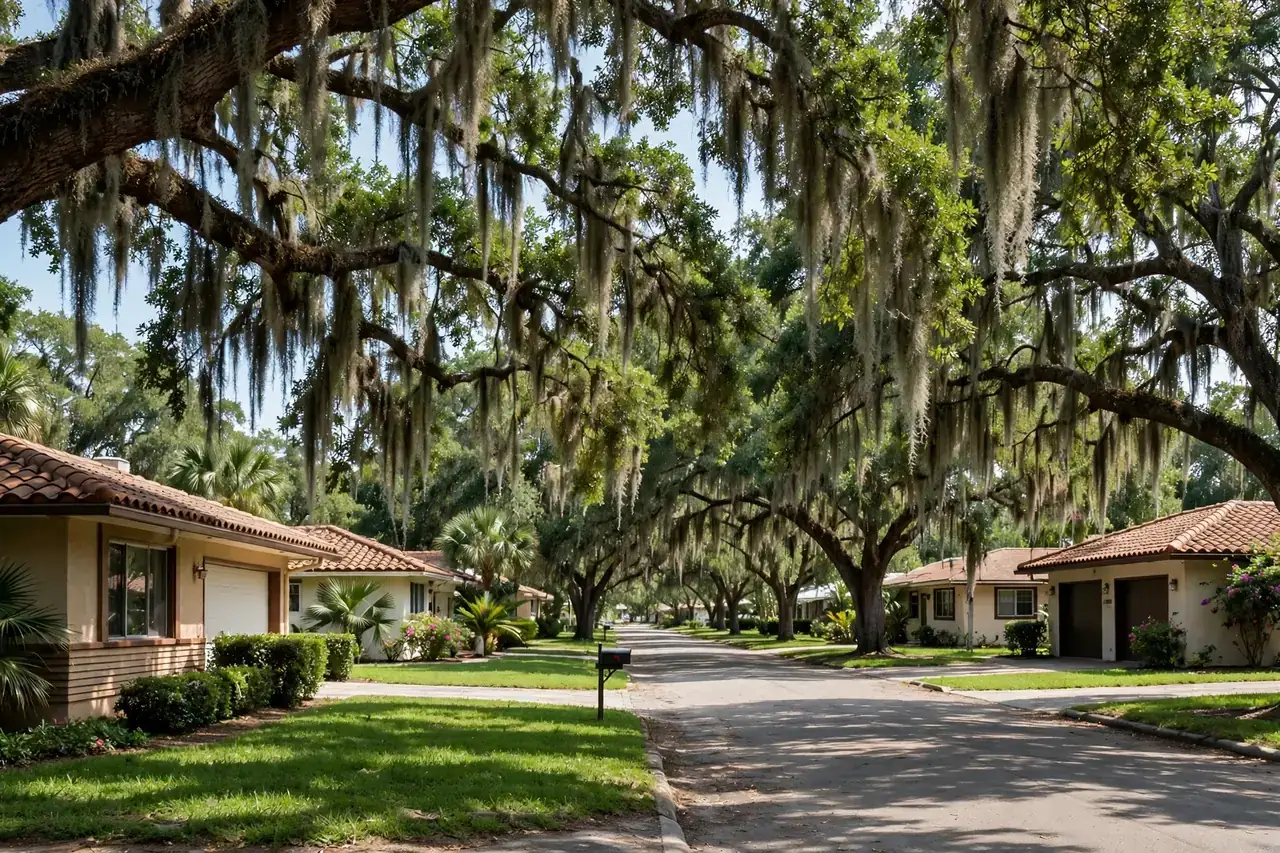
The 34239 ZIP pairs two of Sarasota's most characterful neighborhoods: Southgate, a mid-century residential district of 1950s to 70s homes south of downtown, and Pinecraft, the Amish and Mennonite enclave clustered around Bahia Vista Street. The architecture differs, Southgate's ranch homes and Pinecraft's tiny cottages, but the underground story overlaps: both neighborhoods rely on private laterals from an era when clay tile and early cast iron were the standard materials, and those lines are now fifty to one hundred years old.
Southgate: 1950s to 70s Transitional Construction
Southgate's homes span the transition from post-war building to modern suburbia. The earliest, from the 1950s, typically have cast-iron DWV for interior and under-slab drains with clay tile or cast-iron laterals running to the street; slab-on-grade construction begins in this era, putting drain lines under concrete for the first time. The 1960s to 70s homes continue the cast-iron pattern, the same prime failure cohort found in Gulf Gate, with internal corrosion, scale buildup, and joint deterioration advancing on the same schedule. A Southgate home that has never had its lateral inspected is running on a line whose generation is now failing countywide.
Pinecraft: The Amish Enclave on Bahia Vista Street
Pinecraft is unlike any other neighborhood in Sarasota: an Amish and Mennonite community centered on Bahia Vista Street, where seasonal residents arrive each December and stay through March, filling small cottages that sit quiet the rest of the year. Pinecraft Park anchors the community's social life. The housing stock includes tiny 1920s-era cottages on compact lots, some of the oldest residential structures in the area, and their sewer laterals are as old as the cottages themselves.
Century-Old Laterals on Tiny Lots
The oldest Pinecraft cottages were plumbed when clay tile with mortar joints was the only option, which makes their laterals roughly a century old. Clay tile laterals fail at the joints: mortar deteriorates, groundwater infiltrates, and roots enter. On Pinecraft's small lots the laterals are short, often just a few dozen feet from cottage to main, which keeps camera surveys quick and repairs compact. But the tight lots also mean there is little room for excavation equipment, making trenchless methods the natural fit: lining seals every joint through small access points, and bursting replaces failed runs without opening the lot.
Seasonal Occupancy and the December Load Spike
Pinecraft's seasonal rhythm creates a specific stress pattern for its sewer lines. Through the summer and fall, the cottages sit largely empty: flow through the laterals drops to a trickle, letting scale and sediment settle in aging cast iron and clay. Then December arrives, the cottages fill, and every lateral faces a sudden load increase, full bathrooms, full kitchens, full laundry, on lines that spent months at rest. A lateral with a partial restriction handles an empty cottage indefinitely and backs up the first weeks of the season. For seasonal owners, a fall camera inspection is the rational move: any needed repair is finished before December, not during it.
Rainy Season on Older Lines
From June through September, Sarasota receives roughly 60 percent of its 49 to 53 inches of annual rain, and the seasonally high water table presses groundwater against every buried lateral. For Southgate's cast-iron lines and Pinecraft's clay tile, the rainy season is when old joints show their age.
Infiltration and the Summer Slowdown
Groundwater entering through deteriorated joints adds volume the lateral cannot carry, and the classic symptom is drains that slow every summer and recover each winter. Homeowners adapt to the pattern, until the summer the line does not recover. On clay tile laterals, each joint is an infiltration point; on cast iron, corrosion pits and joint gaps do the same work. A camera inspection during the rainy season can show active infiltration as water visibly entering the pipe, which is the clearest evidence that the joints need sealing rather than the line needing another snaking.
Myakka Sand and Settling
Myakka fine sand underlies these neighborhoods as it does most of the county. When saturated through the rainy season, sandy trench backfill loses compaction and the lateral settles unevenly, forming bellies where wastewater pools instead of flowing. A belly on a short Pinecraft lateral or a Southgate under-slab run is a quiet failure that the camera locates precisely, by footage mark and depth, so the repair targets the sag instead of the whole line.
Mature Trees in Established Neighborhoods
Both Southgate and Pinecraft have had decades to grow their canopy, and mature live oaks and ficus trees now shade streets whose laterals were laid when the trees were young. The root-intrusion pattern is the same as in every older Sarasota neighborhood: roots follow moisture leaking from aged joints, enter the pipe, and build the fibrous masses that trap waste and eventually block flow.
Fixing the Entry Point, Not Just the Roots
Mechanical cutting clears a root blockage for a season; the roots return because the failed joint is still there. Lasting root removal means eliminating the entry point, lining the lateral to seal every joint, or bursting in a new continuous pipe with no joints to exploit. If a Southgate or Pinecraft lateral has needed root cutting more than once, the line itself is the diagnosis.
How We Work in 34239
Every job in Southgate and Pinecraft starts with a camera inspection from an accessible cleanout or pulled toilet. The footage shows the pipe material at every foot, clay tile in the oldest Pinecraft cottages, cast iron in mid-century Southgate homes, along with every joint, belly, and break. You see it with us, so the repair recommendation follows from evidence.
Repairs Sized for the Property
On Pinecraft's tiny lots, trenchless lining and bursting keep the work to small access pits, preserving cottages, plantings, and the narrow streetscape. In Southgate's ranch homes, under-slab cast-iron runs are assessed the same way, camera first, then targeted repair only where the footage shows failure. Seasonal owners can schedule fall inspections and winter repairs around the December to March occupancy, so the work is done when the cottage is empty, not when it is full. Call (941) 344-0088 to schedule.
Sewer Services in Southgate & Pinecraft
Full-service sewer line care for Southgate & Pinecraft homes.
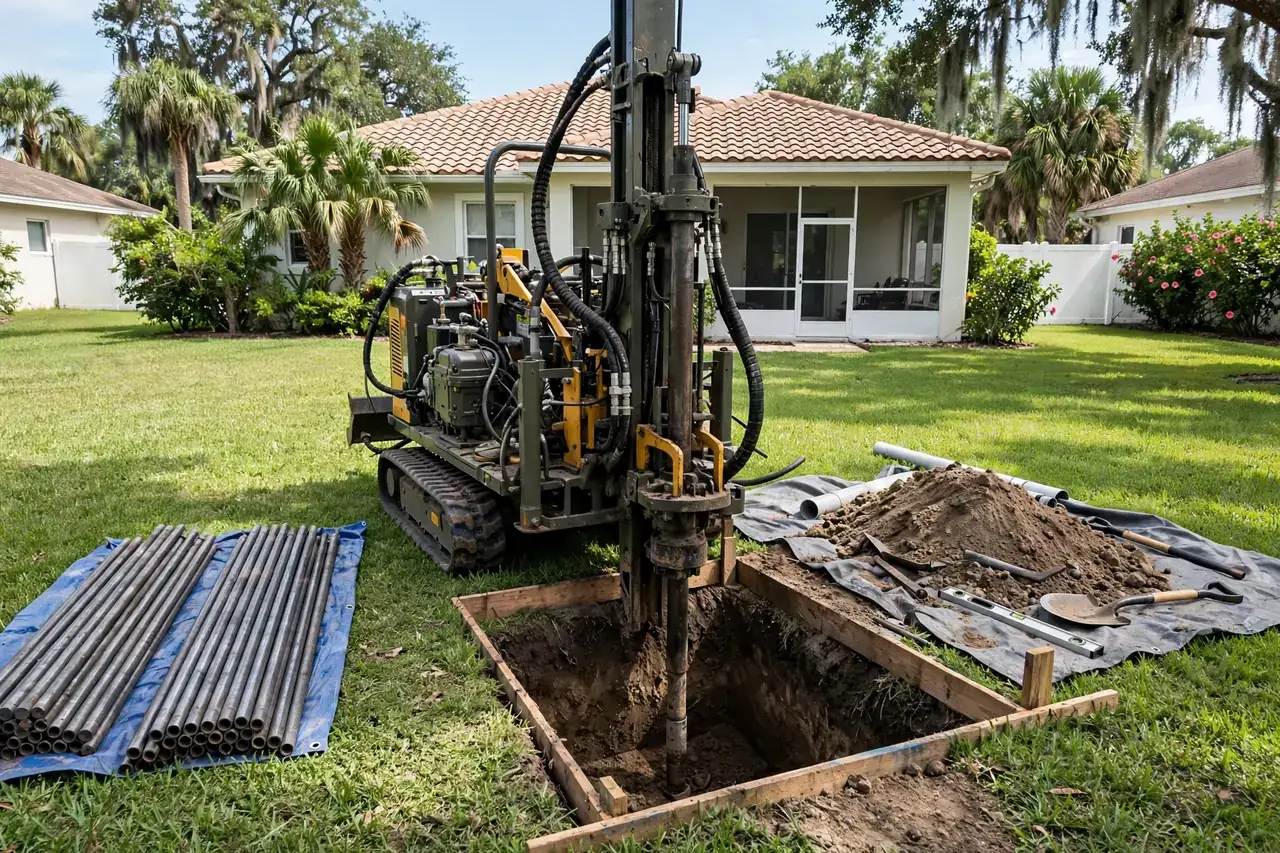
Trenchless Sewer Repair
Trenchless sewer repair in Sarasota, FL with minimal digging. Camera diagnosis, pipe bursting & CIPP lining. C…
Learn more →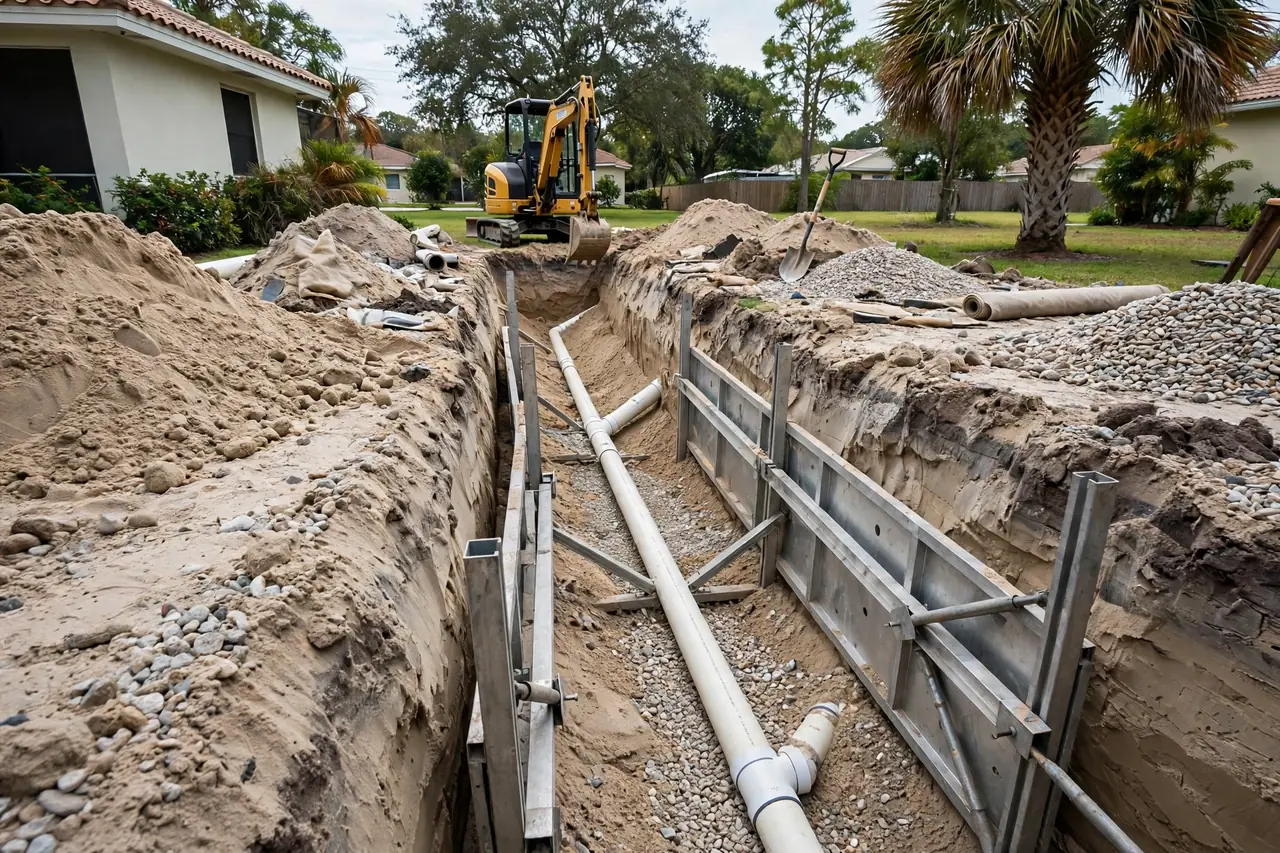
Sewer Line Replacement
Sewer line replacement in Sarasota, FL by excavation when trenchless won't work: proper grade, modern PVC pipe…
Learn more →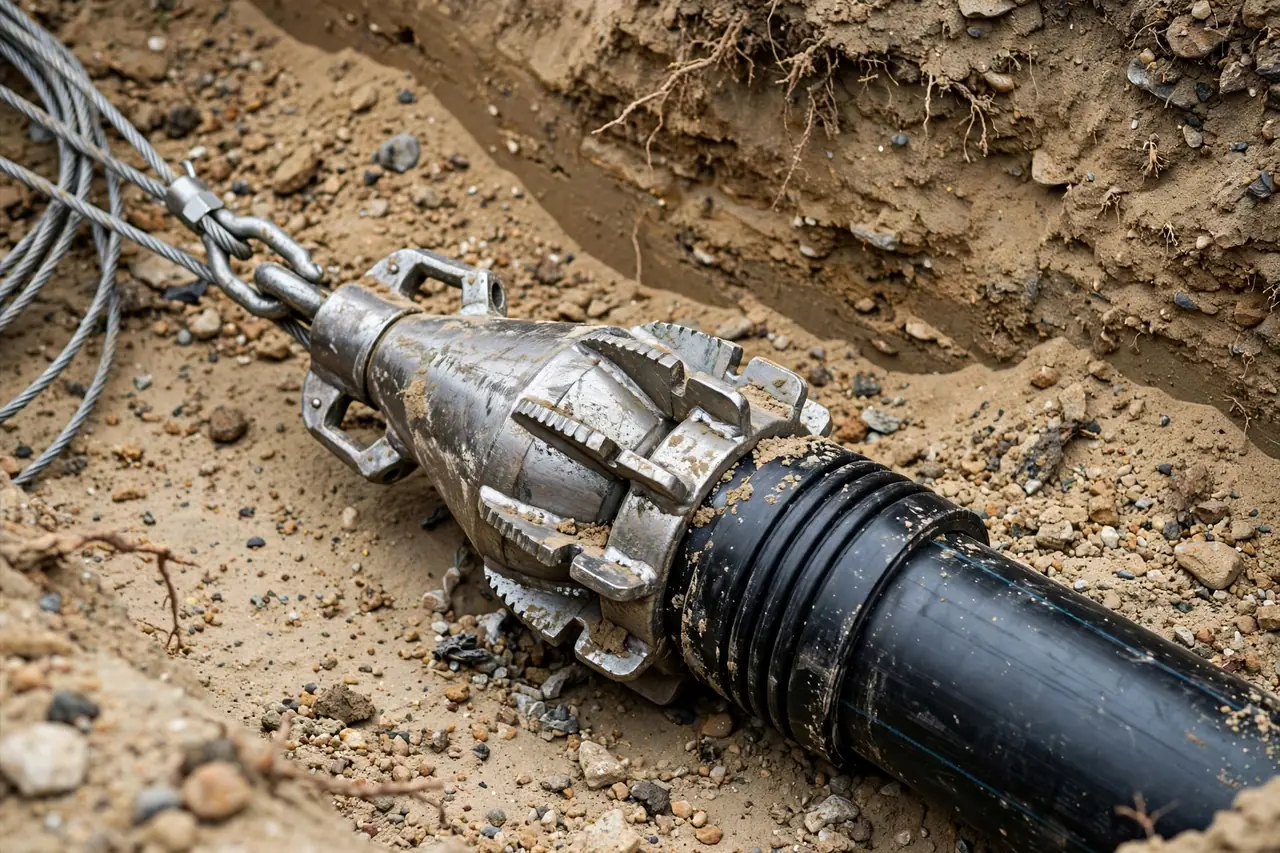
Pipe Bursting
Pipe bursting in Sarasota, FL replaces collapsed sewer lines with minimal digging: new pipe pulled through the…
Learn more →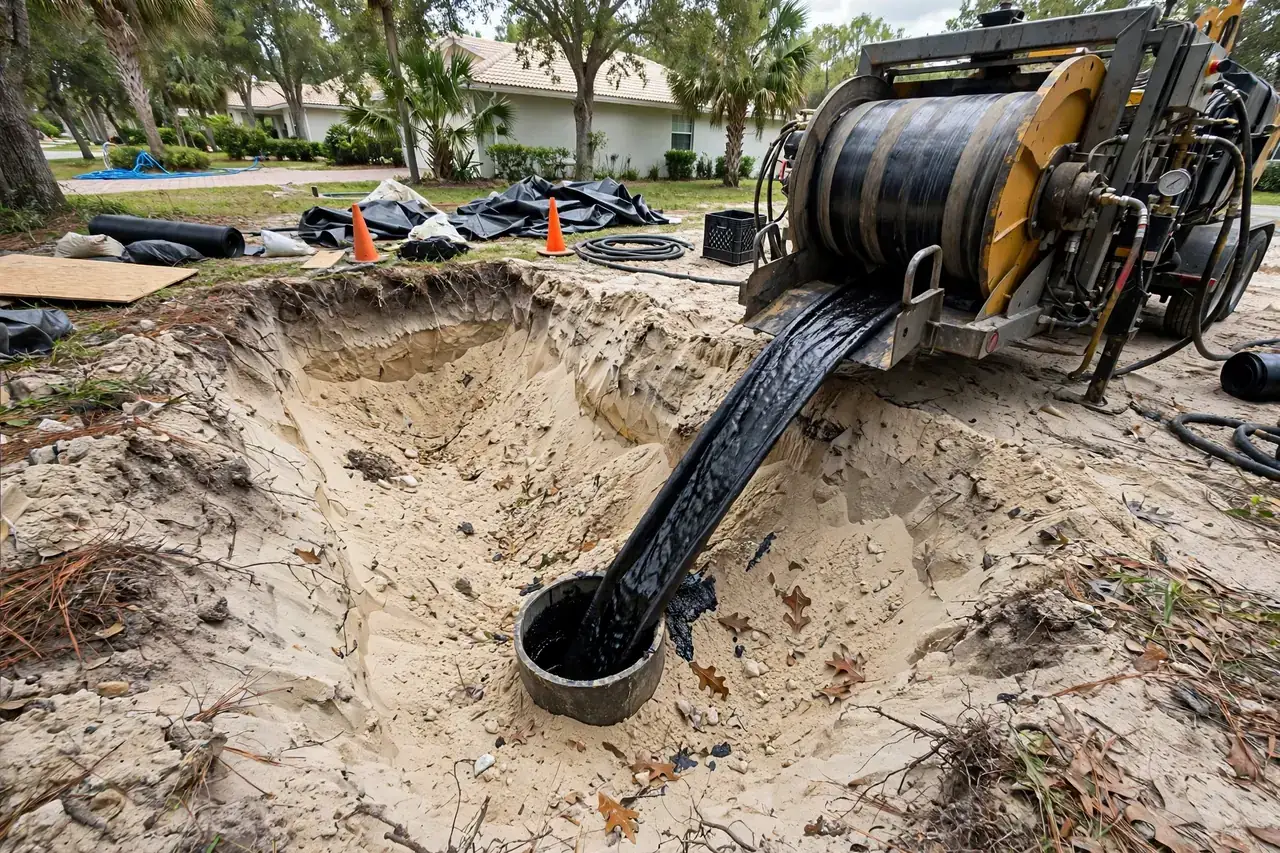
CIPP Pipe Lining
CIPP pipe lining in Sarasota, FL creates a new pipe inside the old one: no trench. Camera inspection, cleaning…
Learn more →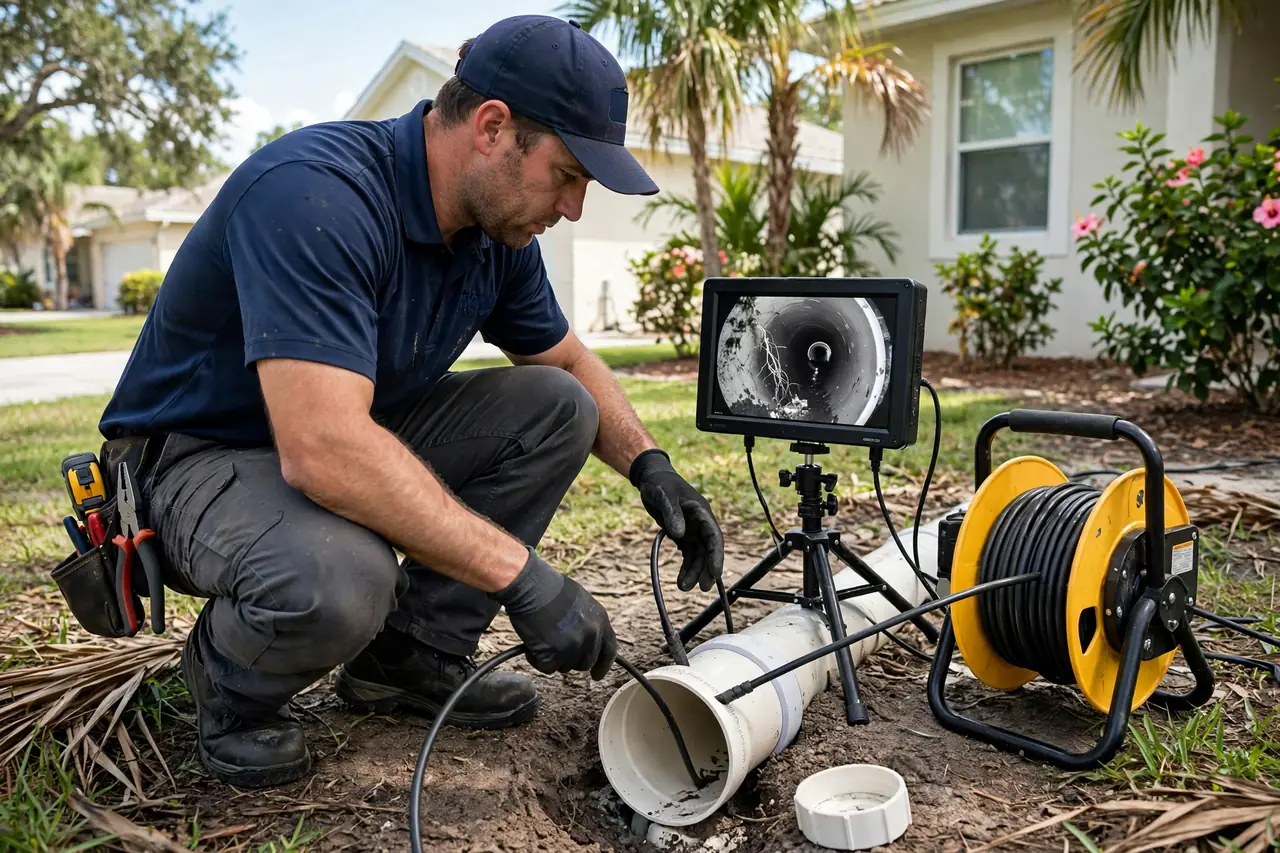
Sewer Camera Inspection
Sewer camera inspection in Sarasota, FL finds roots, scale, bellies & breaks before you dig. HD video diagnosi…
Learn more →ZIP Codes Served
Local Sewer Guides
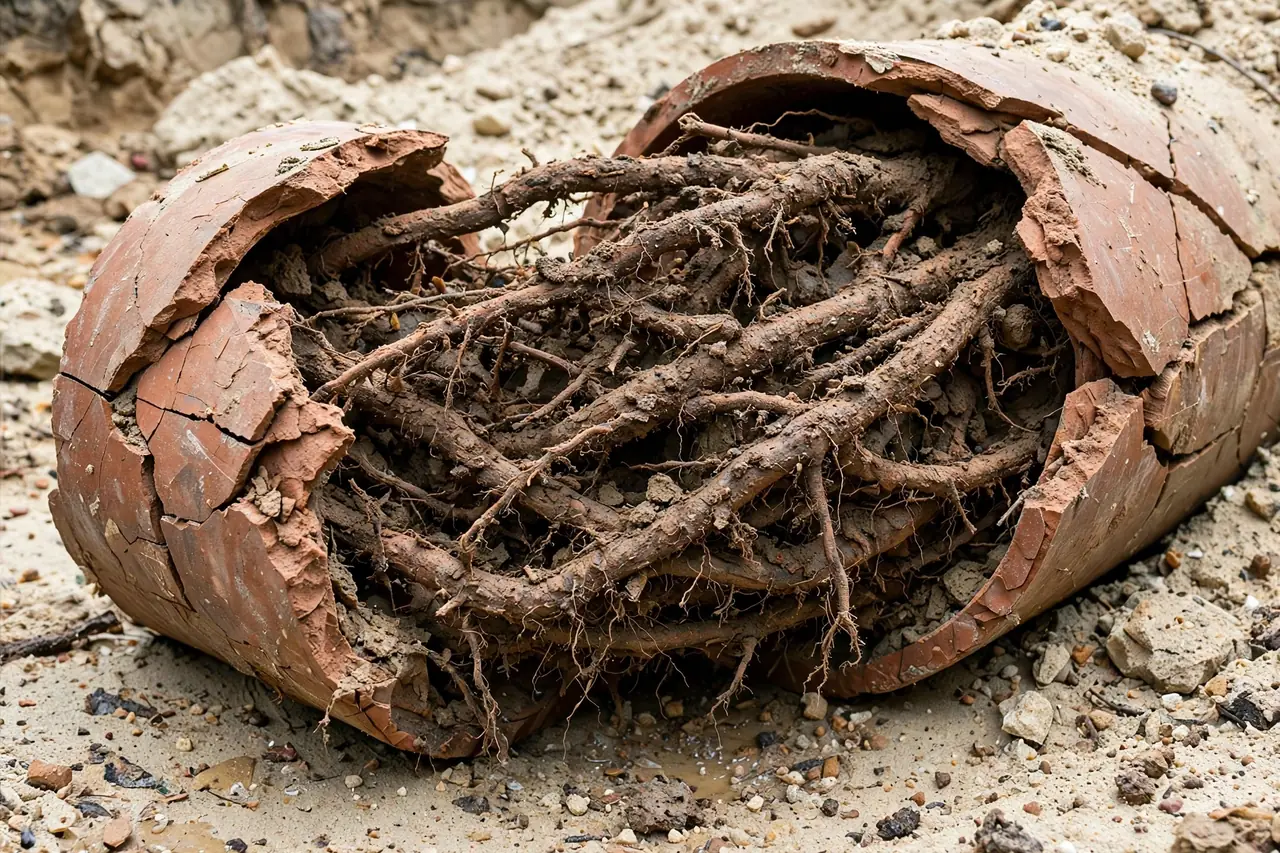
Tree Roots in Sewer Lines: A Sarasota Homeowner's Guide
Tree roots invade Sarasota sewer lines through clay and cast-iron joints. Signs and fixes explained. Call (941…
Learn more →Cast-Iron Sewer Pipe in Sarasota Slab Homes: What to Know
Cast-iron sewer pipe under Sarasota slab homes from the 1960s to 1980s is corroding. Learn the signs and repai…
Learn more →Frequently Asked Questions
What is the Pinecraft Amish enclave?
Pinecraft is a distinctive Amish and Mennonite enclave centered around Bahia Vista Street, where many seasonal residents arrive each December and stay through March. The neighborhood's small 1920s-era cottages sit on tight lots with some of the oldest private sewer lines in the area, clay tile laterals that are now a century old in the oldest cases.
What kind of sewer pipe do Southgate homes have?
Many Southgate homes were built from the 1950s through the 1970s, a transitional era: cast-iron DWV for under-slab and interior drains, with clay tile or cast-iron laterals to the street. Slab-on-grade construction begins in this era, so under-slab cast iron is common.
Does seasonal occupancy affect sewer lines?
Seasonal occupancy stresses laterals in a specific way. Months of low flow let scale and sediment settle in aging cast iron, then the December arrival brings a sudden load increase. A line that handled an empty cottage all summer can back up the first weeks of the season, which is why a pre-season camera inspection is worth scheduling.
Can trenchless repair work on a tiny Pinecraft cottage lot?
Small lots mean the lateral is short and access is tight, but trenchless methods are well suited to exactly this geometry: lining and bursting need only small access pits. The camera inspection first confirms the line's path so access points can be planned around the cottage and its plantings.
Is trenchless repair possible on a 1920s clay tile lateral?
Often, yes, lining seals every joint from the inside through small access points, which is ideal for clay tile whose joints are the failure point. If the tile has collapsed or lost its round shape, pipe bursting or open-cut replacement is the better option. The camera footage determines which.
What are the warning signs of lateral failure?
Common signs: drains that slow across multiple fixtures at once, gurgling toilets, sewage odors, and backups that return after snaking. On a seasonal cottage, any hint of trouble in the off-season deserves attention before December, when the house fills and the line faces its heaviest load.
What should I do first if I suspect a sewer problem?
Start with a camera inspection, it shows the pipe material, every joint, and any damage, and we review the footage with you. For seasonal owners, scheduling the inspection in the fall means any needed repair is done before the December arrival. Call (941) 344-0088 to set it up.