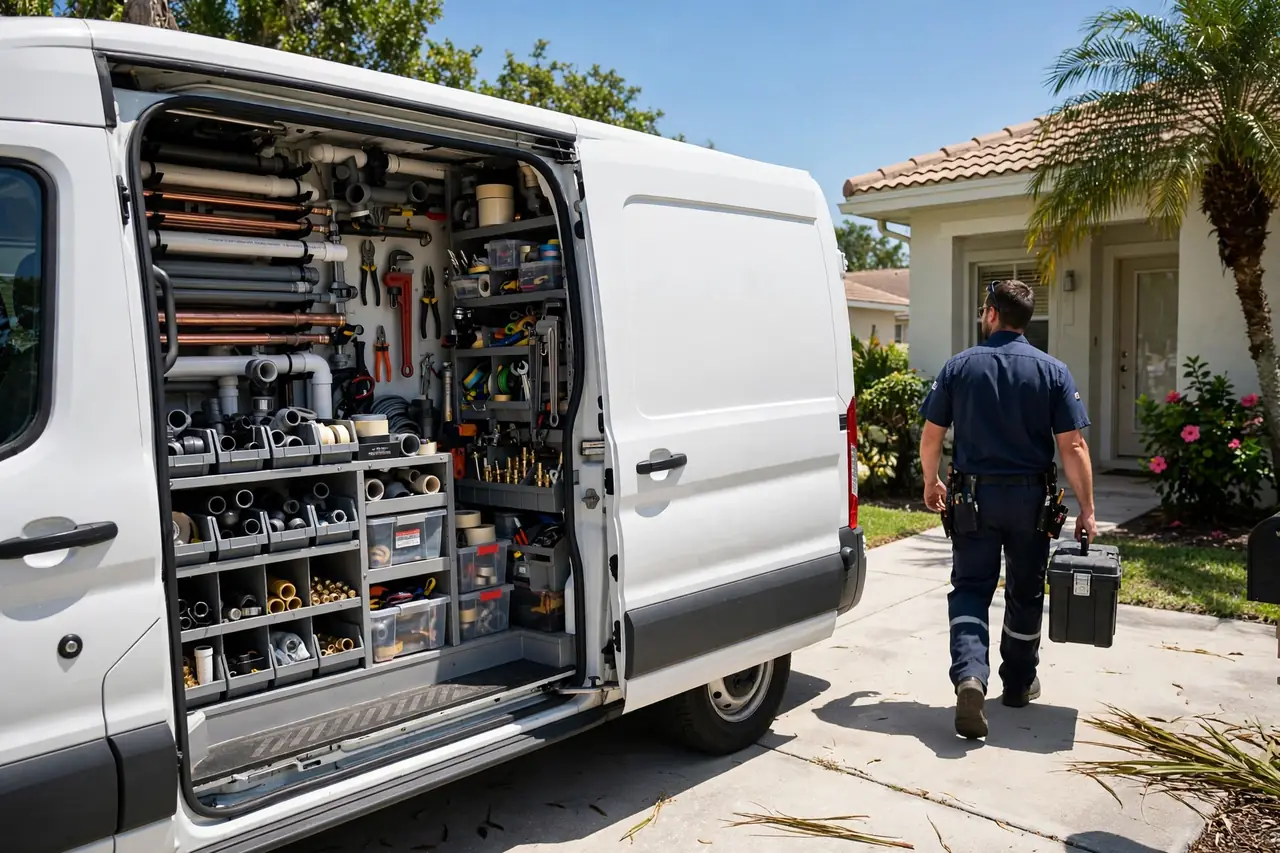
Emergency Sewer Repair in Sarasota, FL
Sewage backing into your home or a sewer line that has burst is an emergency, not a maintenance issue. We respond fast, diagnose with a camera before anyone digs, and stabilize the situation so the damage stops spreading.
What Counts as a Sewer Emergency
Not every drain problem is an emergency, and knowing the difference keeps a bad day from becoming a worse one. A single slow sink is a service call. Sewage backing up through a tub, shower, or floor drain is an emergency. So is a burst lateral, waste water surfacing in the yard, a sudden sinkhole near the sewer path, or drains that stop working house-wide all at once.
The defining feature of a sewer emergency is that it spreads. A backup that starts in one bathroom will reach the next fixture as soon as anyone runs water. A burst line keeps releasing waste into the soil with every flush. In both cases, the clock matters because the damage compounds: contaminated water ruins flooring and drywall within hours, and it carries bacteria that make the affected area unsafe. If you are unsure whether your situation qualifies, call (941) 344-0088 and describe what you see, we will tell you honestly.
Sarasota's Rainy-Season Surge
Sarasota's sewer emergencies are not evenly distributed through the year. They cluster in the rainy season from June through September, when roughly sixty percent of the area's annual rainfall arrives and August alone delivers over nine inches. That volume of water does two things to underground sewer lines.
Saturated Soil Shifts Pipes
Sarasota sits on Myakka fine sand, and when that sand becomes saturated it loses the support it was giving the buried lateral. Sections of pipe sag into bellies; joints that were barely holding pull apart. A lateral that drained fine in April can separate in August simply because the ground around it turned to soup. Each joint separation is an opening for the next problem.
Groundwater Infiltrates and Overwhelms
The seasonally high water table across much of Sarasota County sits just a few feet below the surface. During heavy rain it rises toward the surface and pours into cracked laterals through every separated joint. That infiltration adds enormous volume to the line, stormwater on top of normal wastewater, and a lateral that was already compromised backs up into the house.
Storms Expose Weak Lines
Tropical systems have repeatedly shown how fast this happens. Debby in August 2024 brought inland flooding to areas like Bee Ridge that had never flooded before, and homes with aging clay and cast-iron laterals paid the price. Helene and Milton later that same year added to the damage. Barrier islands like Siesta Key and Longboat Key flood repeatedly, and their laterals take the beating every time. After any major storm, a wave of sewer failures follows, which is why emergency capacity matters most from June through September.
First Steps for the Homeowner
What you do in the first hour of a sewer emergency has more effect on the outcome than anything else. These steps are simple, and they work in exactly this order.
Step One: Stop All Water Use
Every flush, every faucet, every load of laundry adds water to a system that cannot drain it. The backup will not stop until the inflow stops. Tell everyone in the house: no water down any drain until the problem is resolved.
Step Two: Call for Help
Call (941) 344-0088 and describe what is happening, which fixtures are affected, whether it started during rain, whether you can see or smell sewage outside. This information determines what equipment arrives and how fast.
Step Three: Protect People and Property
Keep people and pets out of rooms with standing sewage. Do not run fans or air movers through contaminated water, they aerosolize it. If you can do so safely, move valuables, rugs, and electronics away from the affected area. Wear gloves and boots if you must enter the area, and do not let children near it.
Step Four: Find the Cleanout
Your main sewer cleanout, usually a capped pipe sticking up near the house foundation or at the property line, is how a technician accesses the line fastest. If you know where it is, clear a path to it. If you do not know, do not dig for it; we will locate it.
What Not to Do in a Sewer Emergency
Panic produces bad plumbing decisions, and a few of them are worth naming because they are common. Do not pour chemical drain cleaner into a backing-up line. The chemicals will not reach the real problem, they can damage older pipes, and they turn the standing water into a hazard for whoever works on the line next. Do not keep plunging a toilet while other fixtures are backing up, if the shower and the tub are affected too, the blockage is in the main line, and no amount of plunging will reach it.
Do not run the dishwasher or washing machine to see if things have cleared. Those appliances discharge large volumes of water fast, which is exactly what turns a contained backup into a flooded one. And resist the urge to start digging where you think the break is. Without a camera location, exploratory digging destroys landscaping, risks hitting utilities, and often misses the actual break by yards. The fastest emergency repair is the one that starts with a diagnosis.
Camera Diagnosis Before Any Digging
Emergency or not, we put a camera in the line before anyone picks up a shovel. The camera answers the questions that determine everything else: where is the break, how deep is it, how long is the damaged section, and what is the pipe made of. A break ten feet from the house at three feet deep is a different job than a collapsed lateral at the property line at eight feet.
The camera also distinguishes a cleaning problem from a repair problem in real time. A line packed with roots or grease can often be cleared and restored to service the same day, no excavation at all. A separated joint, a belly, or a collapsed section needs repair, and knowing the exact location means digging one precise hole instead of a trench. That precision is what makes sewer camera inspection the highest-value step in any emergency call.
In Sarasota's high water table, the camera footage also shows groundwater infiltration as it happens, water visibly streaming into the pipe through a separated joint. That evidence explains rainy-season backups better than any theory, and it tells the homeowner exactly why the problem will return with the next storm unless the joint is repaired.
How Emergency Repairs Differ From Planned Work
An emergency repair has two phases, and the order matters. Phase one is stabilization: stop the backup, clear the immediate obstruction, and restore basic function so the house is livable. This might mean emergency root cutting, clearing a grease plug, or pumping down a flooded section. Phase one buys breathing room.
Phase two is the permanent fix, and here the emergency context actually helps: because the camera has already mapped the line, the permanent repair can be planned with complete information. Many emergency situations qualify for trenchless solutions, pipe bursting can replace a failed lateral without a trench across the yard, and CIPP lining can seal a cracked pipe from the inside. Both are far less disruptive than open excavation, which matters when a family is already living through a crisis.
Some situations still require excavation. A fully collapsed section, a lateral crushed by a fallen tree, or a break under a structure may leave no trenchless option. When that happens, the camera location keeps the excavation surgical, one opening, at the right spot, at the right depth.
The Cast-Iron Factor in Older Sarasota Homes
Many Sarasota emergency calls come from the same housing cohort: slab homes built from the 1960s through the 1980s in neighborhoods like Gulf Gate and Bee Ridge, with cast-iron drain piping under the slab and clay or cast-iron laterals to the street. After decades in corrosive soil with a high water table, that cast iron is thin. The failure often arrives as a sudden collapse, drains that worked yesterday back up today with no warning, because the pipe wall finally gave way.
Under-slab emergencies are the hardest kind because the pipe is inaccessible. The camera can see the failure, and hydro jetting can sometimes clear the immediate blockage, but a collapsed or bellied section under the slab needs replacement. This is where trenchless methods earn their reputation: bursting a new pipe through the old line avoids tearing up the slab and the flooring above it. If your home is in that 1960s to 1980s cohort and you have never had the line inspected, a camera inspection before the rainy season is the cheapest insurance there is.
Preparing for Sarasota's Next Rainy Season
Emergencies are best handled before they happen. If your home has a history of slow drains after heavy rain, that is not a quirk, it is an early warning that a joint or section of lateral is failing, and the next big storm may finish the job. A camera inspection in the dry season finds the weak points while the ground is workable and the schedule is flexible.
Know the location of your main cleanout and make sure it is accessible, not buried under landscaping. Keep the number for emergency service somewhere you can find it at midnight, (941) 344-0088, because sewer emergencies never arrive at noon on a Tuesday. And after any major storm, watch your drains for a few days. Backups that arrive two or three days after the rain, as the water table peaks, are classic infiltration failures. Catching them early means a repair instead of a flood. See trenchless sewer repair for how those repairs are done without tearing up the property.
Emergency Sewer Repair Across Sarasota
We bring emergency sewer repair to homes throughout Sarasota and nearby Gulf Coast cities.
Related Reading

Why Sarasota Sewer Backups Spike Every Rainy Season
Sarasota sewer backups spike every rainy season, June to September. Learn why and what to do. Call (941) 344-0…
Learn more →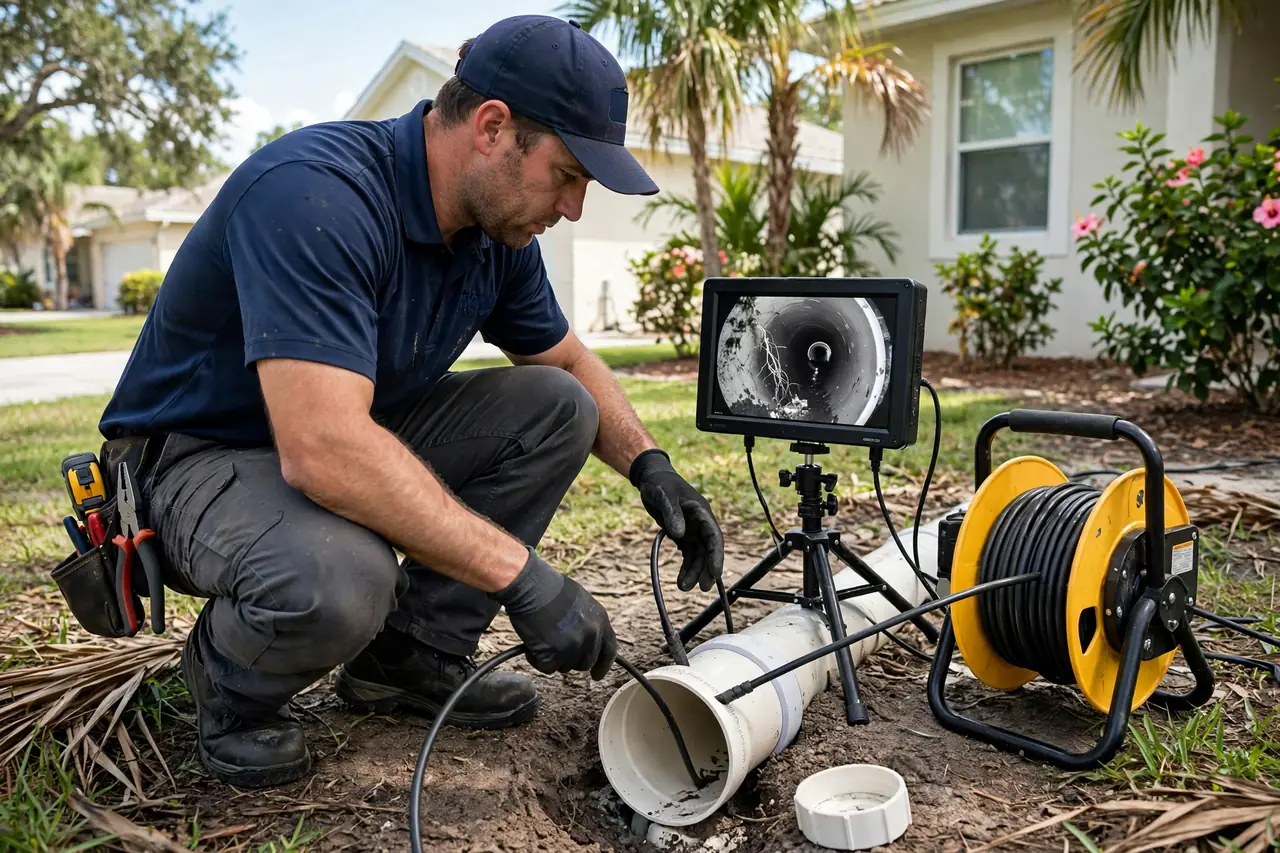
7 Signs Your Sewer Line Is Failing (Sarasota Edition)
Seven signs your Sarasota sewer line is failing: slow drains, gurgling, odors, and backups. Call (941) 344-008…
Learn more →Frequently Asked Questions
What should I do in the first five minutes of a sewage backup?
Stop using water and call. Then avoid every drain, toilet, and faucet until the problem is diagnosed. If sewage is on floors, keep people and pets away and do not run fans that spread contaminated air. Move valuables out of the affected area. Note which fixtures are affected, that information speeds up diagnosis when the technician arrives.
What should I not do during a sewer emergency?
Do not use chemical drain cleaners on a backup, they can damage pipes and create a hazard for anyone who later works on the line. Do not keep plunging a toilet that overflows when other fixtures are also affected. Do not run the dishwasher or washing machine to "test" whether the line is clear. And do not dig around a suspected break before it is located on camera; you can easily make the damage worse.
Is a backup during heavy rain more urgent than one on a dry day?
Yes. In Sarasota, late-afternoon downpours routinely trigger backups in homes whose laterals have separated joints or bellies. If your backup arrived during or right after heavy rain, tell us, that pattern points directly at infiltration through storm-shifted joints, and it changes what we look for on the camera. Debby in 2024 showed how quickly inland flooding can expose a weak lateral.
Why spend time on a camera inspection instead of digging right away?
A camera inspection usually takes under an hour and gives a definitive answer instead of a guess. Most homeowners find that reassuring rather than slow: digging without a camera risks tearing up the wrong section of yard, which costs far more time in the end. The camera shows the break, the depth, and the distance, everything needed to plan the smallest possible repair.
Will an emergency repair always require digging up my yard?
Sometimes. If the camera shows a collapsed section, a separated joint, or a pipe full of roots that cannot be cleared from inside, excavation is the honest answer. Trenchless methods handle many emergencies, burst pipe replacement and lining both work on failed lines, but they need a host pipe with enough integrity to work with. The camera tells us which path your line qualifies for.
How can I prepare my home before a sewer emergency happens?
It helps to know where your main cleanout is before trouble starts, usually a capped pipe near the house foundation or at the property line. It also helps to know which fixtures are on the lowest level, because those back up first. In the rainy season, keep an eye on drains after the heaviest storms of June through September. Slow drains that arrive with the rain are your early warning system.
Why is fast response so important with sewage backups?
Contaminated water can damage flooring, drywall, and belongings quickly, and sewage carries bacteria that make it a health issue, not just a mess. Quick professional response limits both. Stabilize first, stop water use and isolate the area, then get a diagnosis on camera. The longer contaminated water sits, the more expensive the cleanup becomes, whatever the plumbing repair itself requires.