Why Sarasota Sewer Backups Spike Every Rainy Season
Every summer, sewer backup calls across Sarasota County surge from June through September. The cause is not coincidence, it is a repeatable chain of underground events driven by saturated Myakka sand, a water table just feet below grade, and groundwater pushing into cracked laterals.
June Through September: What Changes Underground
For most of the year, the soil around your sewer line is stable and mostly drained. Then the rainy season arrives, and everything underground changes. Sarasota's rainy season runs from June through September, and about 60 percent of the area's 49 to 53 inches of annual rain falls in those four months, with August the wettest single month at over nine inches. That is an enormous amount of water delivered to the ground in a short window, and it rewrites the conditions every buried pipe in the county lives in.
Your sewer lateral, the pipe connecting your home to the city main or your septic-to-sewer tie-in, sits in soil that is now saturated from the surface down past the pipe's depth. The pipe itself does not move, but its environment does. Saturated sand behaves nothing like dry sand. It is heavier, weaker, and far more mobile, and it presses against the pipe with water it did not press with in February. At the same time, groundwater outside the pipe rises and starts pushing inward through any crack, separated joint, or porous spot it can find. The pipe that carried your wastewater away effortlessly all winter is now fighting a battle on two fronts: structural stress from shifting soil and hydraulic pressure from groundwater trying to get in.
This is why the timing of backups is so predictable. The calls start with the first sustained June rains, peak through August, and taper as September dries out. Homeowners often describe it as the line suddenly going bad, but the line was usually already compromised. The rain does not create the cracks. It exposes them.
How Saturated Myakka Sand Stresses Sewer Laterals
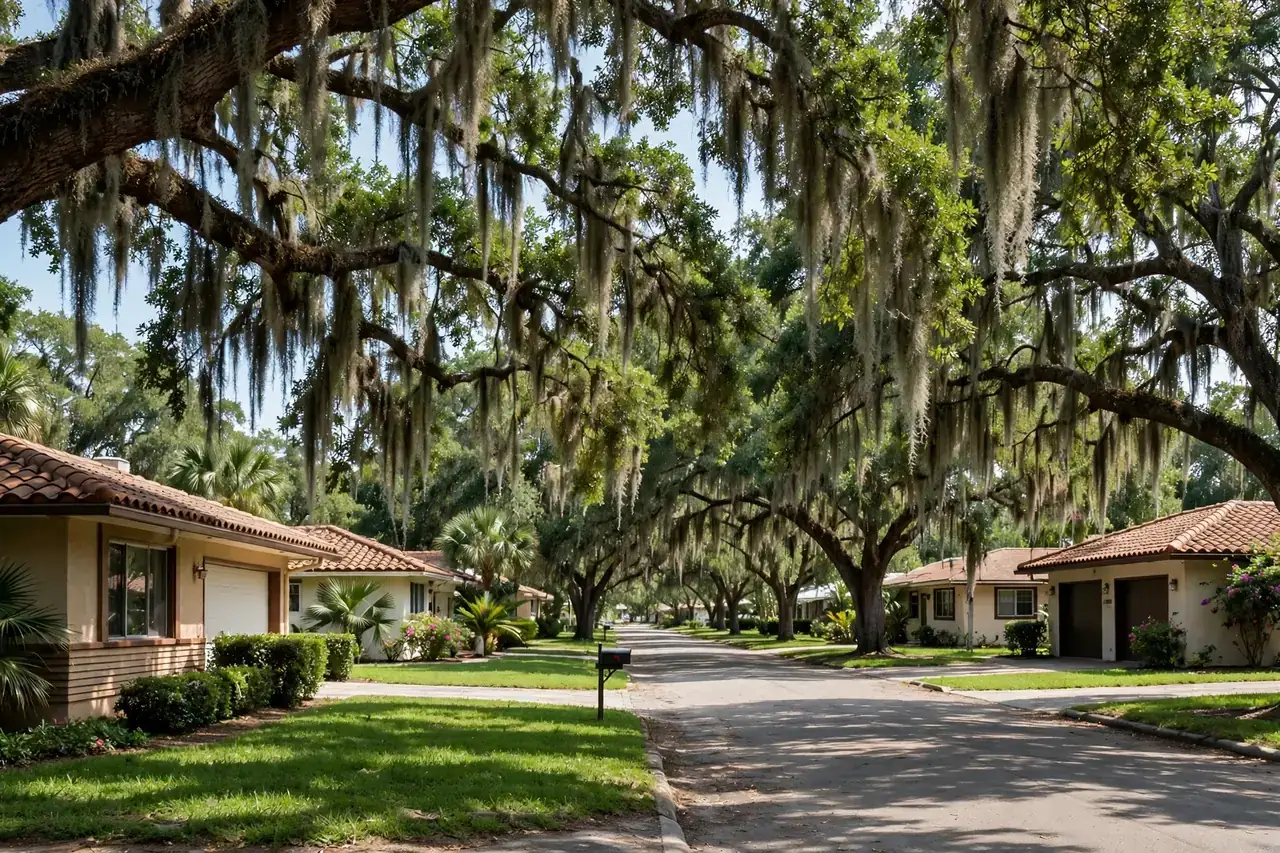
Much of Sarasota County sits on Myakka fine sand, Florida's state soil, with pockets of poorly drained EauGallie fine sand mixed in. Fine sand drains quickly in dry weather, which gives it a reputation for being easy to dig and friendly to pipe bedding. The problem is what happens when that sand saturates. Waterlogged fine sand loses a large share of its load-bearing strength, and a pipe that was resting in firm, supportive soil is now resting in something closer to a slurry.
Soil support matters because sewer pipes are designed to flow by gravity at a precise slope, a few inches of fall per hundred feet. When the bedding soil softens unevenly, sections of pipe settle or sag into bellies: low spots where wastewater pools instead of draining. A bellied section is not just a flow problem. Standing wastewater is more corrosive than flowing wastewater, so the belly becomes the section of pipe that deteriorates fastest. And because the ground saturates deepest in August, bellies that were harmless in the dry season become active traps right when the system is under maximum stress.
Uneven settling also torques the joints between pipe sections. Clay tile laterals, still common in Sarasota's 1920s to 40s and 1950s to 60s housing stock, connect with rigid joints that tolerate very little movement. Cast-iron DWV and laterals handle more, but even they have limits. When saturated soil shifts a pipe section a fraction of an inch, a joint that held for forty years can separate. Once a joint separates, the pipe is open to everything the saturated soil carries: groundwater, silt, and the fine feeder roots of the nearest thirsty tree.
Infiltration: When Groundwater Enters Through Cracks
The second half of the rainy-season mechanism is infiltration, groundwater leaking into the sewer system through defects. Sarasota County's seasonally high water table sits just 0 to 3.5 feet below grade across large parts of the county. A typical residential lateral runs deeper than that at its lower end. Do the math: for much of the rainy season, the outside of your pipe is below the water table, which means groundwater is pressing inward against every crack and separated joint with constant hydrostatic pressure.
Clean water leaking into the sewer system is bad for two reasons. First, it steals capacity. Your lateral and the city main both have a finite flow capacity, and every gallon of groundwater that infiltrates is a gallon of wastewater that cannot get through as easily. During a heavy August storm, infiltration across thousands of laterals adds up to a system-wide surge that can overwhelm sections of the public main, which is when surcharging happens and wastewater pushes backward toward homes.
Second, infiltration carries silt. Groundwater entering through a separated joint or crack drags fine sand with it, and that sand settles in the pipe downstream, building bars and deltas inside the line that narrow the flow path. This is the slow-motion version of the backup problem: each rainy season deposits a little more silt, each season the pipe flows a little less freely, and one year the combination of silt buildup and a storm surge finally crosses the line into a backup. A sewer camera inspection after a backup can show whether silt infiltration is the story, the camera finds the entry point and the deposits downstream of it.
Warning Signs During a Storm Week
Rainy-season sewer trouble usually announces itself before the full backup. The earliest sign is drainage that slows in step with the weather: fixtures that drain fine on a dry day and gurgle or hesitate after two days of rain. That weather-linked pattern is the signature of infiltration and partial blockage, the line has enough capacity when groundwater is out, and not enough when it is in.
Gurgling from toilets or floor drains is next on the list. It means air is being displaced by water somewhere in the system, and the water is rising higher than it should. If gurgling appears in fixtures you have never had trouble with, a guest bathroom, a laundry standpipe, the backup is probably forming further downstream, in the main line or the yard lateral, and the pressure is finding every available relief point.
Sewer odor during or after storms is a related warning. Saturated ground around a cracked lateral lets sewer gas migrate through the soil and up around the home's foundation, and changing barometric pressure during storm systems can push that gas through tiny gaps. And the unmistakable sign: water or sewage appearing in the lowest fixtures, shower pans, tubs, floor drains, when it has not rained on your roof at all. That is backflow from the system, and it means the line is overwhelmed downstream of your home. When you see that, stop using water and get emergency sewer repair on the line, every additional flush adds to what is already coming back up.
What Homeowners Can Do Before Rainy Season
The best time to deal with rainy-season sewer risk is May, before the first sustained storms. A camera inspection in late spring shows the pipe's condition under dry conditions, cracks, separations, bellies, root intrusion, scale, and tells you exactly what the water will find when it comes. If the camera finds a separated joint or a heavy root mass, clearing and repairing it in the dry season is simpler, faster, and far less stressful than doing it while sewage is backing into a bathroom.
Cleaning matters too. Hydro-jetting a line in spring scours out the scale, grease, and silt that narrowed the pipe over the past year, restoring the full flow capacity the line will need in August. For lines with known root intrusion, a jetting pass with a root-cutting head clears the year's growth before the rain arrives. Neither service fixes structural damage, but both buy back the margin the line needs to survive the season.
A few practical habits round out the preparation. Know where your cleanout is, the capped access pipe that lets a technician reach the line quickly, and make sure it is accessible, not buried under landscaping or a paver patio. Know where your water meter shutoff is in case you need to stop all water use during a backup. And during the heaviest storm weeks, stagger water use: run the washing machine and dishwasher at different times rather than together, and avoid long showers during downpours. None of this is a substitute for a sound pipe, but it reduces the peak load at exactly the moments the system is closest to its limit.
Backwater Valves and Storm-Season Protection
There is one device worth understanding in this context: the backwater valve. It is a one-way valve installed on the building sewer line, usually just outside the home or at the lowest practical point of the drainage system. Wastewater flows out through it normally; if flow reverses, if the city main surcharges and pushes wastewater back toward the home, the valve's flapper closes against the reverse flow and blocks it from entering the house.
A few honest caveats. A backwater valve does not fix a broken lateral, clear roots, or add capacity to your pipe. It protects the home's interior from backflow originating downstream of the valve, which is exactly the kind of backup rainy seasons produce, when the public main is overwhelmed by infiltration and storm flow. It is a defensive device, not a repair.
Placement and maintenance matter. The valve needs to sit where reverse flow would otherwise enter the home's lowest fixtures, and it needs to remain accessible for inspection and cleaning, debris caught in the flapper can hold it open and defeat the purpose. If your home is in a low-lying area of Bee Ridge or another flood-prone pocket where neighbors have reported storm-season backups, a conversation with a plumber about a backwater valve is worth having before June, not after the first backup. Combined with a sound lateral, verified by camera, it is the closest thing a homeowner gets to rainy-season insurance for the sewer system.
The Sarasota-Specific Storm Factor
Sarasota's storms add a layer that inland cities do not face. Tropical systems, Irma in 2017, Ian in 2022, Tropical Storm Debby in August 2024, and Helene and Milton in 2024, dump months' worth of rain in days, saturating ground that the normal rainy season has already soaked. Debby's inland flooding reached into areas like Bee Ridge that many homeowners did not think of as flood-prone, and the saturated ground that lingered for weeks afterward put every lateral in the area through the exact joint-stressing cycle described above.
Barrier islands face an even sharper version. Siesta Key and Longboat Key flood repeatedly, and island sewer infrastructure contends with storm surge, tidal infiltration, and a water table that barely sits below grade in dry weather. If you own on or near the keys, treat your sewer line as part of your storm preparation, the same way you think about shutters and sandbags, because the ground conditions that flood a street are the same ground conditions that stress a pipe.
The through-line for every Sarasota homeowner is this: the rainy season does not damage healthy sewer lines, but it relentlessly tests damaged ones. Cracks, separations, bellies, and root masses that survive the dry season untouched become the failure points of August. A spring inspection, a jetting when the camera shows it is needed, and honest attention to how your fixtures behave during storm weeks will keep most homes ahead of the season instead of behind it.
Published 2026-10-09 · Sarasota Sewer Specialists
Related Sewer Services
Emergency Sewer Repair
Emergency sewer repair in Sarasota, FL for backups and burst lines. Fast response, camera diagnosis. Call (941…
Learn more →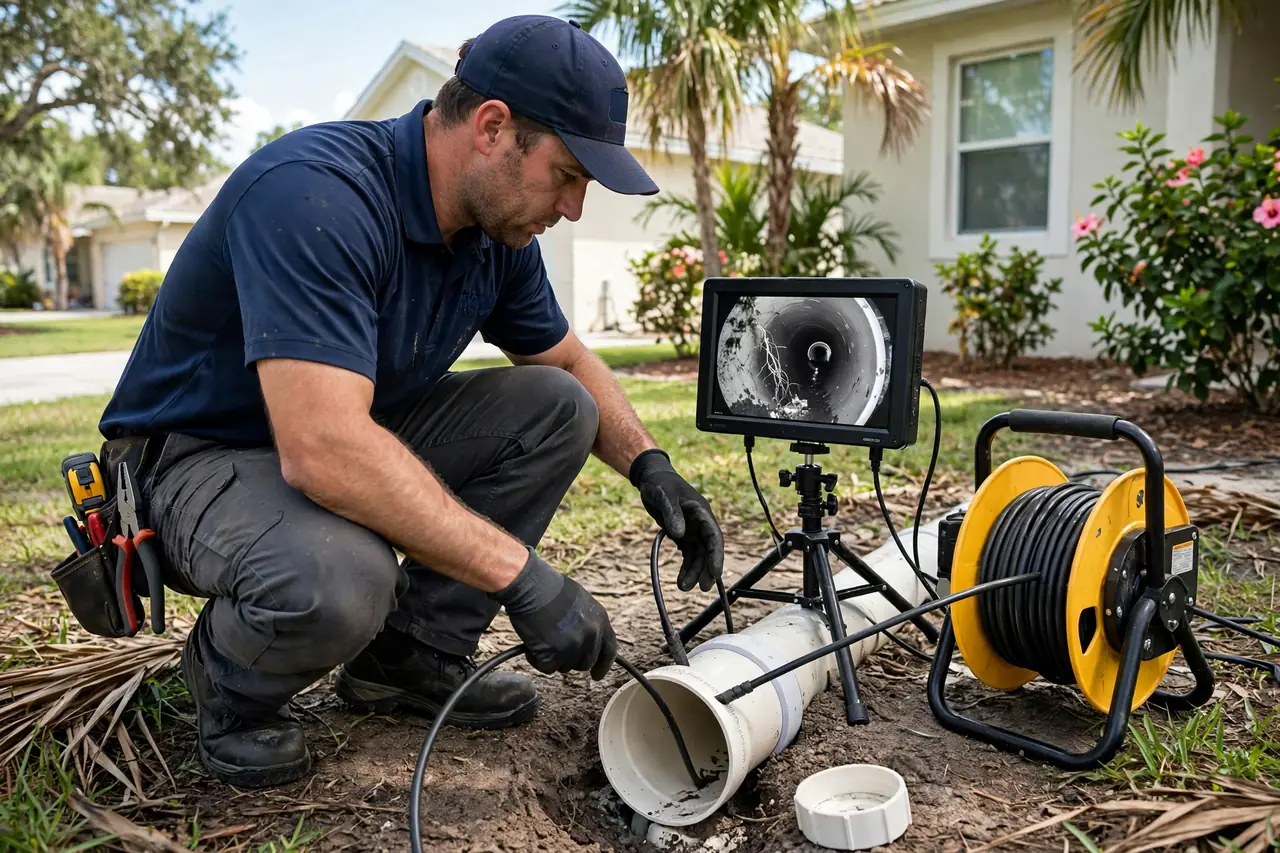
Sewer Camera Inspection
Sewer camera inspection in Sarasota, FL finds roots, scale, bellies & breaks before you dig. HD video diagnosi…
Learn more →Nearby Service Areas
Frequently Asked Questions
When is sewer backup season in Sarasota?
Sarasota's rainy season runs June through September, with August the wettest month. Most backup calls cluster in those four months, and the weeks after major storms bring the most. The pattern repeats because the mechanism is seasonal: saturated soil, a rising water table, and infiltration into already-cracked laterals. The same home that drains fine in February can back up in August with no new damage at all.
If my whole street has sewer problems during a storm, is it the city's fault?
Usually, yes. Saturated soil and high groundwater stress every lateral in a neighborhood at once, so the city main or the shared ground conditions are often part of the story. Your plumber or the city can determine where the blockage sits, a camera inspection of your lateral is the reliable way to know whether the problem is in your pipe, at the connection, or in the main.
What does a backwater valve do, in general terms?
A backwater valve is a one-way device installed on the building sewer that lets wastewater flow out but closes against flow coming back in from the main. It does not fix a broken lateral, but it protects the home's interior from surcharges pushing up through floor drains and fixtures. Discuss sizing and placement with a plumber, since it needs to be accessible for maintenance.
Why does my plumber keep asking whether I have a cleanout?
A cleanout is a capped pipe that gives direct access to the sewer line, it lets a technician run a camera or a jetter without going through your fixtures or digging. Without one, diagnosis takes longer and costs more labor. If your home lacks an accessible cleanout, having one installed is a modest improvement that pays off every time the line needs service.
Will a camera inspection help if the backups only happen during storms?
The camera shows the pipe's condition, cracks, joint separations, bellies, root intrusion, and scale, which is exactly the information that tells you whether the line will survive the next rainy season. A line that is sound in May can still struggle in August if the water table rises enough, but a camera report tells you whether infiltration, not just capacity, is your risk.