Septic-to-Sewer Conversion in Sarasota County, FL
Sarasota County is systematically converting septic properties to centralized sewer, driven by a statewide 2030 deadline and major treatment-plant expansions. Here's what's happening, what it means for your property, and the vacuum-sewer detail that changes how connections work.
What Is Happening in Sarasota County
Sarasota County is in the middle of one of the largest septic-to-sewer conversions in Florida. Thousands of properties still on septic tanks are being connected to centralized sewer in phases, and the program is accelerating toward Florida's statewide 2030 septic deadline. If your home is on septic, conversion is not a question of if, it is a question of when your phase arrives.
The program's backbone is treatment capacity. The Bee Ridge Water Reclamation Facility is being upgraded from 12 to 18 million gallons per day with advanced treatment, the capacity the system needs to absorb the newly converted areas. The Venice Gardens expansion, which will serve the south county conversion areas, is expected around 2029. North Port's phase 1 residential conversions are targeted for completion by 2031. Each of these milestones unlocks the next wave of neighborhood connections. If you are on septic anywhere in the county, call (941) 344-0088, we can help you understand what the conversion means for your property's plumbing.
Why the County Is Making the Switch
A working septic tank treats wastewater on the property. A failing one, and many of Sarasota County's aging tanks are failing, leaks nutrients and bacteria straight into the groundwater. In a county where the seasonally high water table sits zero to three and a half feet below the surface, that groundwater is not far away, and it feeds the creeks, bays, and estuaries that define the area.
Centralized sewer with advanced treatment removes that risk. The Bee Ridge upgrade to advanced treatment is specifically about cleaning the converted wastewater to a standard that protects local waterways. The state's 2030 deadline reflects the same logic applied statewide: in a place with a high water table and sensitive water bodies, on-site septic is a legacy technology being retired. For property owners, the practical upshot is that the county is coming, the only variables are timing and what your property needs to be ready.
What Conversion Involves for a Property Owner
The county or its utility contractors handle the public side: installing the sewer main in the street and the lateral to your property line. The property side, everything from your house to that connection point, is where the owner's work happens, and it is more involved than many people expect.
Connecting the Home's Plumbing
Your home's drain system currently ends at the septic tank. Conversion reroutes it to the new sewer connection at the property line. For most homes this means installing a new lateral from the house to the property line, since a septic property typically has no sewer lateral at all. That new line runs under whatever is between the house and the street, lawn, landscaping, sometimes a driveway, and it has to be installed at proper grade with the right fittings and cleanouts.
Decommissioning the Septic Tank
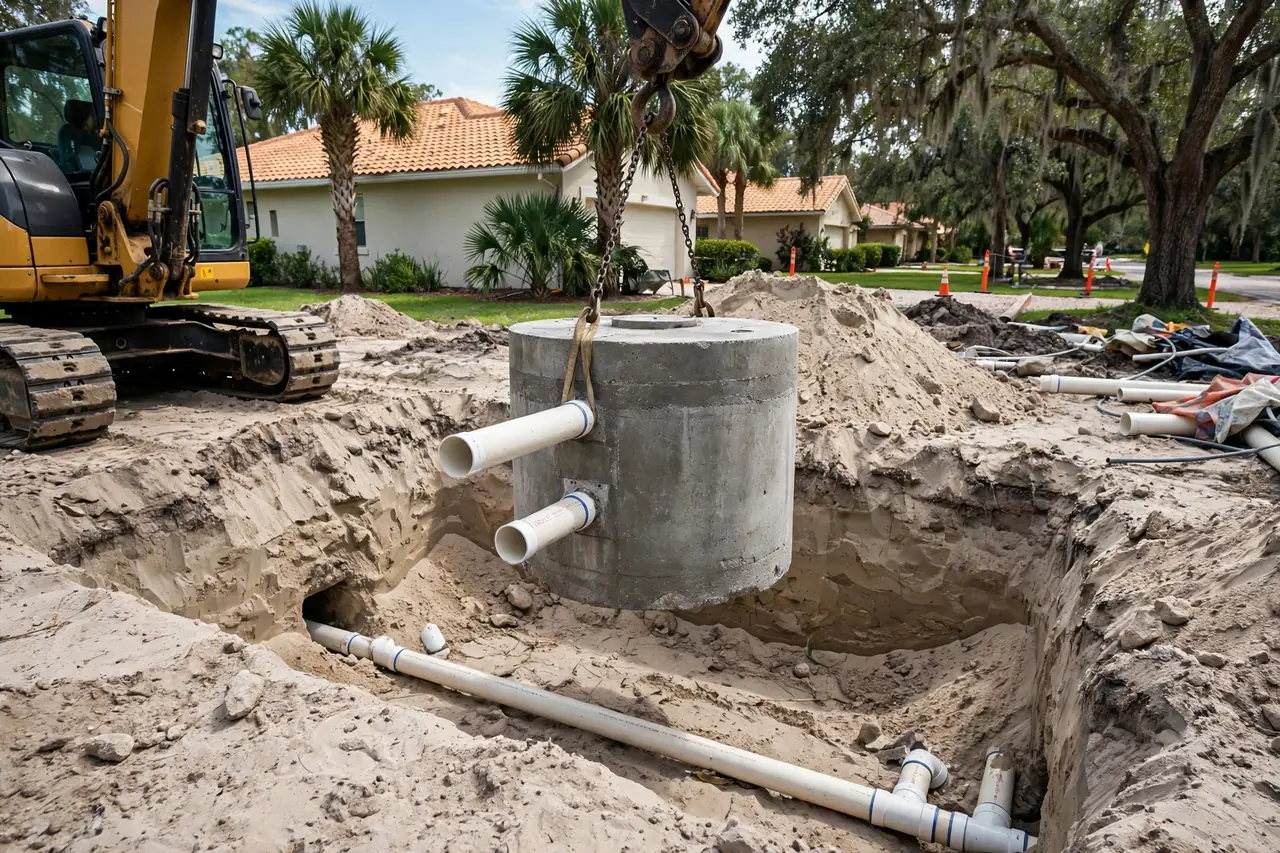
The old tank cannot simply be left in the ground. County requirements typically call for the tank to be pumped out and then filled with sand or crushed in place, so it cannot collapse later and create a sinkhole under your yard. This step is inspected, and the paperwork matters, an unpermitted abandoned tank can surface as a problem years later when you sell the property.
Inspection and Verification
The completed connection is inspected to confirm proper installation, and a sewer camera inspection of the new lateral verifies that it is clear, correctly graded, and properly connected. This is also the moment to confirm that the home's interior drain piping is in good shape, older homes sometimes discover that their drain lines need attention once the new lateral is in place and the whole system is under real load for the first time.
The Vacuum Sewer Nuance
Here is the detail that catches property owners off guard: not all of Sarasota County's sewer is gravity sewer. Roughly twelve thousand homes in the Englewood area are served by AIRVAC vacuum sewer systems, and vacuum sewers work on fundamentally different principles than the gravity mains most people picture.
How Vacuum Sewers Differ
In a gravity system, wastewater flows downhill through the pipes to the treatment plant. In a vacuum system, a central vacuum station maintains negative pressure in the mains, and each property connects through a vacuum valve pit, a small chamber, usually near the property line, where a valve opens intermittently to pull wastewater into the main. The system is sealed; the vacuum is what moves the waste.
Why the Main Cannot Be Cut Into
A gravity main can be tapped, cut into, to add a new connection, which is how most sewer tie-ins are done. A vacuum main cannot. Cutting into a vacuum main breaks the seal that the entire system depends on, destroying the vacuum for every property on that line. New connections to a vacuum system happen at designated points, through the valve-pit arrangement the system was designed for.
What This Means for Your Conversion
If your neighborhood is on a vacuum system, your connection follows the vacuum design: a valve pit on or near your property, installed to the system's specifications, connecting your home's gravity plumbing to the vacuum main. The property-side work is specified by the county's project engineers for your area, do not assume a standard gravity tie-in, and do not let anyone cut into a vacuum main. Before planning any property-side work, confirm whether your area is gravity or vacuum. It changes the connection design, the components, and who does which part of the installation.
Timelines: What to Expect and When
Conversion timelines are set by the county's phasing, and they move with infrastructure milestones. The Bee Ridge plant upgrade to 18 MGD is the capacity foundation, neighborhoods convert as treatment capacity and main construction reach them. The Venice Gardens expansion around 2029 opens up the south county phases. North Port's phase 1 residential conversions are targeted by 2031.
For an individual property owner, the practical timeline has three stages. First, notification, the county or project office contacts property owners as their phase approaches, typically with information sessions and connection requirements. Second, the public-side construction, mains and laterals-to-the-property-line go in along your street. Third, the property-side connection window, during which your home's plumbing must be tied in and the septic tank decommissioned.
The honest advice: do not wait for the notification letter to start thinking about it. Properties with aging drain piping, unmapped plumbing, or difficult access (long setbacks, pools, mature landscaping over the connection route) take longer to connect. Getting a camera inspection of your existing drain system and a clear picture of your property's layout now means the connection window is routine instead of rushed. Florida's 2030 deadline is fixed; the phases leading to it are the county's schedule to meet.
Preparing Your Property for Conversion
There is useful work a property owner can do well before their phase arrives. Start by locating your septic tank and drain field, many owners of older homes are not sure exactly where they are, and the decommissioning crew will need to know. Next, map the route from your house to the street: what lies between the plumbing exit and the property line, and what would have to be crossed or removed to install a lateral.
If your home's interior drain piping is old, cast iron from the 1960s to 1980s era, for example, consider having it inspected on camera. Conversion puts the full system under normal municipal-sewer use, and weak interior piping that survived on a septic system can fail under the new arrangement. Addressing it during the conversion, while work is already happening, is far cheaper than a separate line replacement later.
Avoid major landscaping or hardscaping over the likely connection route until the conversion is done. A new paver driveway poured six months before the lateral has to cross it is an expensive surprise. And keep maintaining the septic system in the meantime, pump on schedule, fix surfacing effluent promptly. A failing septic system does not get a pass because conversion is coming; it still affects your groundwater and your neighbors'.
How Conversion Affects Your Sewer Lateral
For a septic property, the conversion creates the lateral, the pipe from the house to the municipal main, for the first time. That new lateral becomes your responsibility to maintain, just like any sewer lateral, and its installation quality determines decades of trouble-free service or decades of problems.
The lateral should be installed with proper grade, the right pipe material, accessible cleanouts, and verified by camera before it is buried. In Sarasota's soil conditions, Myakka fine sand, a high water table, and the rainy-season saturation that shifts unsupported pipe, proper bedding and compaction around the new lateral matter as much as the pipe itself. A lateral installed carelessly in sandy soil will belly within a few rainy seasons, and then you own a brand-new line with an old problem.
This is also where trenchless installation methods can help. Where the route from house to street crosses a driveway, patio, or mature landscaping, trenchless techniques can install the new lateral with minimal surface disruption. And once the lateral is in and the septic era ends, the maintenance playbook is the same as any Sarasota sewer line: keep grease out of the drains, watch for root intrusion from mature trees, and schedule a camera inspection if drains slow after heavy rain. Call (941) 344-0088 to talk through your property's conversion plan.
Septic-to-Sewer Conversion Across Sarasota
We bring septic-to-sewer conversion to homes throughout Sarasota and nearby Gulf Coast cities.
Related Reading
Septic-to-Sewer Conversion in Sarasota County: The 2026 Picture
Sarasota County septic-to-sewer conversion: deadlines, timelines, and what homeowners should know. Call (941) …
Learn more →
Barrier-Island Sewer Challenges: Siesta Key & Longboat Key
Sewer challenges on Siesta Key and Longboat Key: high water table, sand infiltration, and fixes. Call (941) 34…
Learn more →Frequently Asked Questions
When will my neighborhood be connected to sewer?
Sarasota County is converting septic areas to centralized sewer in phases. Key milestones: the Bee Ridge treatment plant is being upgraded from 12 to 18 million gallons per day of advanced treatment capacity, the Venice Gardens expansion is expected around 2029, and North Port's phase 1 residential conversions are targeted by 2031. Florida's statewide 2030 septic deadline is driving the overall timeline. Your specific timeline depends on which phase your neighborhood falls into.
What does the conversion process involve for my home?
Conversion typically involves connecting your home's plumbing to the new sewer lateral, decommissioning the old septic tank (usually pumped and filled or crushed per county requirements), and final inspection. The county or utility installs the main and the lateral to your property line; the connection from your house to that point is the property owner's portion. A camera inspection of the new connection verifies everything flows correctly.
My area has vacuum sewers, does that change the connection?
Yes, and that matters for how your connection is made. In vacuum sewer areas, your property connects through a vacuum valve pit, and the vacuum main itself cannot be cut into the way a gravity main can. The connection work follows the vacuum system's design, which the county's project engineers specify for each property. Do not assume a standard gravity connection; confirm your area's system type first.
Why is the county converting septic systems to sewer?
A properly functioning septic tank treats waste on site; a failing one leaks nutrients and bacteria into the groundwater. In Sarasota County, where the water table sits just a few feet below the surface in many areas, failing septic systems directly threaten the same groundwater that feeds local waterways. Centralized advanced treatment removes that risk and is why the state set the 2030 deadline.
Will conversion require digging up my yard?
Often, yes. Homes on septic typically have no sewer lateral at all, so the connection work includes running a new line from the house to the property line, sometimes under the driveway or landscaping. In older neighborhoods, this is also the moment to address any aging drain piping inside the property, since the crew is already on site. Trenchless methods can install the new lateral with minimal digging.
What should I do with my septic system while I wait?
Until your conversion is complete, maintain the septic system normally: have the tank pumped on its regular schedule and fix any surfacing effluent or slow drains promptly. A failing septic system in the interim still affects your groundwater and can complicate the conversion. Once the county notifies you of your phase's schedule, avoid major landscaping over the planned connection route.
How do I find out my property's conversion status?
Contact Sarasota County's utilities department or the project office for your area to confirm your phase and timeline. Property owners are typically notified as their phase approaches, but checking directly is faster. Once you know your system type, gravity or vacuum, and your phase's schedule, you can plan the property-side work, including any lateral installation, with a clear picture of what is required.