Cured-in-Place Pipe (CIPP) Lining in Sarasota, FL
CIPP lining installs a resin-saturated liner inside your existing sewer pipe and cures it into a smooth, jointless new pipe, no trench, no excavation. It is the right answer for cracked or root-invaded lines that are still structurally sound.
What CIPP Lining Actually Creates
Cured-in-place pipe lining does not patch a pipe. It builds a new one inside the old one. A flexible liner, typically a felt or fiberglass tube, is saturated with a liquid resin, inserted into the existing sewer line, and then cured until the resin hardens. What emerges is a rigid, smooth, jointless pipe that sits snugly against the interior of the original, using the old pipe as a host and a form.
Think of it the way a cast uses a broken arm as its form: the old pipe gives the liner its shape and position, and the cured liner becomes the working surface that carries wastewater. Once cured, the liner is a standalone structural pipe. The corroded cast iron or cracked clay around it is no longer doing the work; it is simply the mold the new pipe was formed in.
The finished interior is the payoff. Old cast iron is rough with scale. Old clay tile is interrupted by a joint every few feet. A cured liner is one continuous smooth surface with no joints at all, and joints are where roots enter, where scale catches, and where separations begin. Lining does not just cover damage; it eliminates the features that caused the damage.
The CIPP Process, Step by Step
1. Camera Inspection and Measurement
Everything starts with the camera. An HD inspection maps the line's length, diameter, defects, and branch connections, and confirms that the pipe is a lining candidate, sound enough to host a liner, with grade intact. The liner is then cut and prepared to the line's exact dimensions.
2. Cleaning and Preparation
The line is cleaned aggressively: roots are cut out, cast-iron scale is mechanically removed, and debris is jetted clear. The liner needs a clean host to bond to, and any remaining obstruction would show up in the finished pipe. This step decides the outcome of the job, and it is never rushed.
3. Liner Insertion
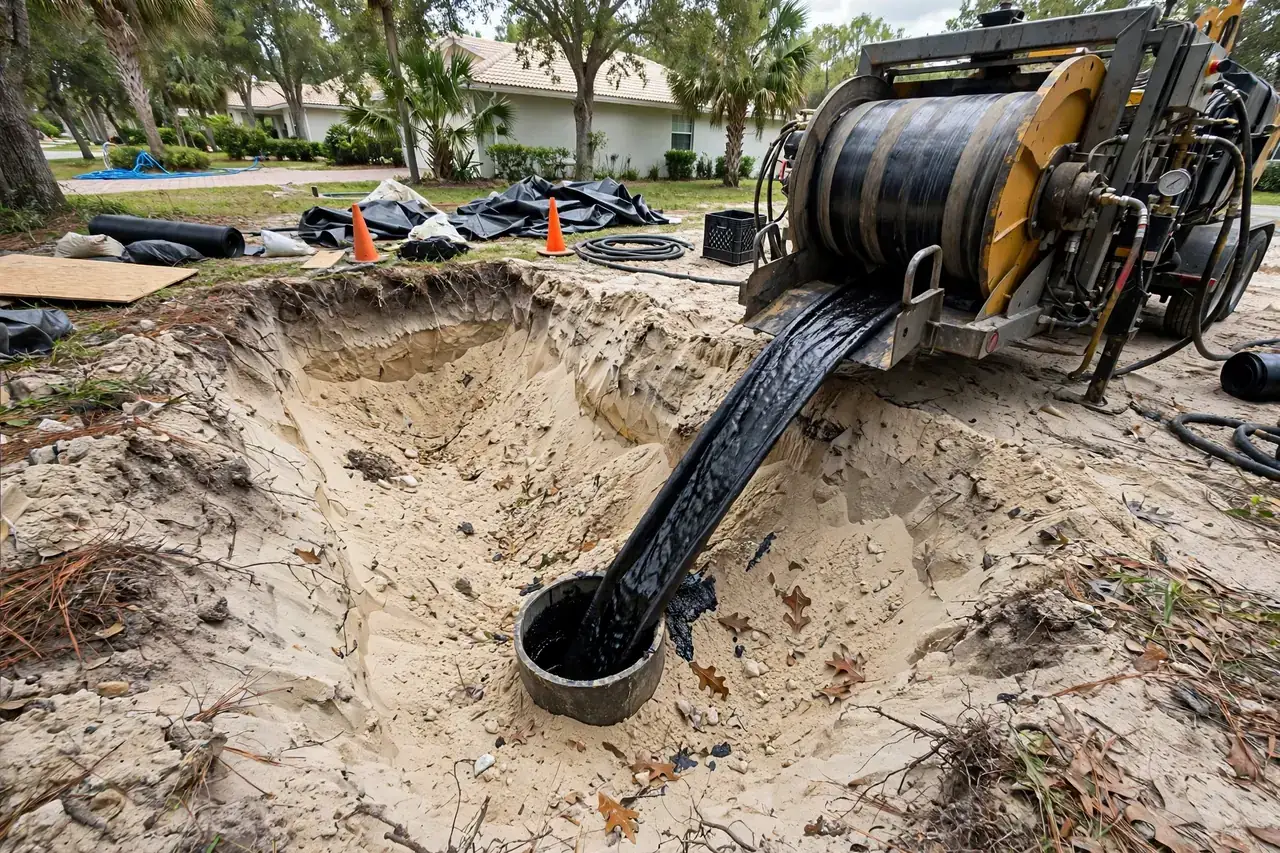
The resin-saturated liner is inserted into the pipe, either inverted into place using water or air pressure, which turns it inside-out as it advances, or pulled into position with a cable. Either way, it ends up pressed tightly against the interior of the old pipe along the full length of the run.
4. Curing
With the liner in position, it is cured: hot water or steam circulated through it, or ultraviolet light drawn through it, triggers the resin to harden. Curing converts the flexible tube into a rigid pipe. Times vary with the length and diameter of the run, but curing typically completes the same day.
5. Reinstatement and Verification
Where branch lines join the run, a robotic cutter reopens each connection through the cured liner. Then the camera goes through the finished pipe end to end: verifying a continuous liner, open connections, and clear flow. You see the finished result on video before the job is considered done.
Why Lining Suits Sarasota's Older Lines
Sarasota's older pipe materials read like a list of problems that lining was designed to solve. Clay tile laterals in the historic core, Laurel Park, the Rosemary District, Gillespie Park, the Burns Court bungalows of 1924 to 25, are jointed every few feet, and every joint is a seam where roots enter and where saturated soil can pull sections apart. A cured liner bridges all of those joints at once, converting a segmented line into a single continuous pipe.
Cast-iron drain lines, the signature material of the 1950s to 1980s tracts and slab subdivisions, corrode from the inside out. Once the scale is cleaned away, a structurally sound cast-iron line with cracks and pinholes is an excellent lining host: the liner seals the corrosion damage and gives the line a new interior surface without disturbing the slab above it. For Gulf Gate and Bee Ridge homes with cast iron under the slab, that means rehabilitation with no concrete broken inside the house.
The sandy soil helps too. Lining needs the host pipe to hold its position during curing, and Sarasota's failures are usually material failures, corrosion, cracked joints, root intrusion, rather than wholesale soil collapse. When the pipe's shape is intact and only its integrity is compromised, lining is the least invasive way to restore it.
When Lining Is NOT the Right Call
Lining has firm limits, and a trustworthy contractor states them upfront. If your line falls into one of these categories, lining will fail, and we will tell you so rather than install it.
Bellies and Sags
A belly is a section where the pipe has lost its downhill slope and holds standing water. A liner follows the existing shape of the pipe, so a liner cured through a belly simply reproduces the sag in resin. The water still ponds. The solids still settle. Bellies are grade problems, and grade is corrected by excavation and re-laying pipe, see our sewer line replacement page.
Collapsed or Flattened Pipe
A liner needs a host to form against. Where the pipe has collapsed or gone oval, there is nothing for the liner to take its shape from. Collapsed sections belong to pipe bursting, which replaces the pipe outright, or to excavation.
Severe Offsets
Where one section of pipe has shifted sharply relative to the next, a stair-step in the line, a liner cannot bridge the gap cleanly. Minor offsets can be accommodated; severe ones cannot.
Uncleanable Scale and Debris
If decades of cast-iron scale or hardened deposits cannot be removed by descaling and jetting, the liner has no clean surface to bond to. In that case the pipe is beyond rehabilitation, and replacement is the honest recommendation.
The camera inspection sorts all of this out before any liner is ordered. That is its job.
Cleaning Comes First: Why Prep Decides the Outcome
Ask any lining crew where jobs go wrong and they will point at preparation, not at the resin. A liner is only as good as the surface it bonds to, and Sarasota's older lines rarely offer a clean surface without work.
Cast-iron lines carry internal scale, rough, flaking corrosion built up over decades. It has to be mechanically removed, because a liner cured over loose scale is a liner bonded to something that will keep flaking underneath it. Root masses at clay tile joints have to be cut out completely; a root ball left in place becomes a permanent lump in the finished pipe. Grease, sediment, and debris are jetted clear so the liner seats tightly against the host along its full length.
This is why the cleaning step uses hydro jetting and mechanical descaling rather than a quick pass with a snake. A snake punches a hole through a blockage; lining prep needs the full circumference of the pipe clean. The post-cleaning camera pass, before the liner goes in, is the quality gate: if the host is not clean and sound, the liner waits.
Lining Laterals Under Slab Homes
Some of the best lining candidates in Sarasota are the lines homeowners dread most: the cast-iron drains running beneath the concrete slabs of 1960s to 1980s homes. The traditional repair, breaking the slab, excavating under the house, replacing pipe, pouring new concrete, turns a pipe problem into a construction project inside the living space.
Lining approaches from outside. The liner is inserted through an existing cleanout or a small access point beyond the foundation and drawn or inverted through the under-slab run. The resin cures in place, the connections are reinstated robotically, and the camera verifies the finished pipe, all without opening the slab. For a homeowner in Gulf Gate or Bee Ridge facing a failing under-slab line, this is often the difference between a pipe repair and a home renovation.
The same outside-in approach serves lines under driveways, pool decks, and mature landscaping. Wherever the old method would have meant demolition, lining means access through the existing openings.
What a Lined Pipe Handles Afterward
A cured liner leaves you with a jointless pipe inside the old one, smooth, continuous, and sealed at every former joint. The practical effects are straightforward. Roots, which entered through joints and cracks, find no openings in the lined section. The rough scaled interior that caught solids and slowed flow is replaced by a smooth bore that carries wastewater cleanly. The leaks at separated joints that let groundwater infiltrate during the rainy season are sealed shut.
Maintenance after lining is simple: keep the line clear of what should never go down a drain, and consider a periodic camera check, especially if mature live oaks or ficus trees stand anywhere near the lateral. The liner handles the pipe's interior; the camera confirms the surrounding conditions have not created new problems upstream or downstream of the lined section.
One caution: lining fixes the lined section. If the camera inspection showed additional defects beyond the lined run, a belly further down, a separated joint at the main, those still need their own remedy. We line what lining can fix and say plainly what it cannot.
Lining vs Bursting at a Glance
Lining and bursting are the two trenchless options, and they are chosen by pipe condition, not by preference.
- Lining rehabilitates. The old pipe stays in the ground as a host; a new pipe forms inside it. Best for cracked pipe, leaking or root-invaded joints, and corroded-but-sound cast iron. Slightly reduces internal diameter; seals every joint at once.
- Bursting replaces. The old pipe is fractured outward and a new jointless pipe is pulled into its path. Best for collapsed pipe, severe offsets, and lines that need upsizing. Full new pipe, same or larger diameter.
- Neither fixes a belly. Both follow the existing alignment. Grade problems need excavation.
Our pipe bursting page covers the replacement method in detail. In practice, the camera footage makes the decision clear, which is why every project, lining or otherwise, begins with an inspection. Call (941) 344-0088 to schedule yours.
CIPP Pipe Lining Across Sarasota
We bring cipp pipe lining to homes throughout Sarasota and nearby Gulf Coast cities.
Related Reading
Pipe Bursting vs. Pipe Lining: Which Fits Your Sarasota Home?
Pipe bursting vs pipe lining for Sarasota homes: how each trenchless method works and when each wins. Call (94…
Learn more →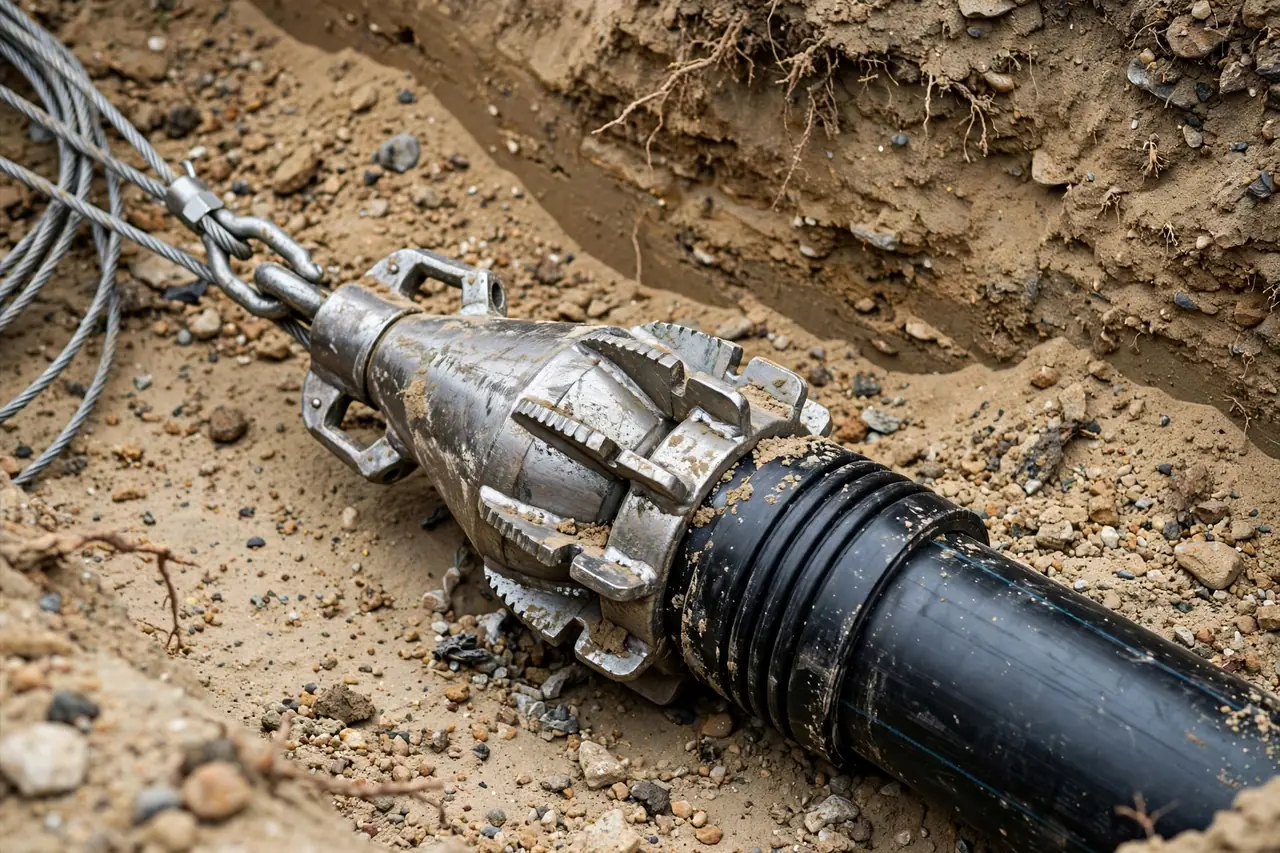
Cast-Iron Sewer Pipe in Sarasota Slab Homes: What to Know
Cast-iron sewer pipe under Sarasota slab homes from the 1960s to 1980s is corroding. Learn the signs and repai…
Learn more →Frequently Asked Questions
How is a CIPP liner installed inside an old pipe?
A flexible tube saturated with resin is inserted into the existing pipe, either inverted into place with water or air pressure, or pulled in with a cable, and positioned over the damaged section. The liner is then cured, typically with hot water, steam, or ultraviolet light, which hardens the resin into a rigid, smooth pipe that bonds to the inside of the old one. A final camera inspection verifies the result.
Does pipe lining reduce the pipe's diameter?
Slightly, yes. The liner sits inside the existing pipe, so the internal diameter is reduced by the liner's thickness. In practice this rarely affects performance, because the cured liner's interior is far smoother than the corroded or scaled pipe it covers, wastewater flows more easily through a smooth smaller bore than a rough larger one. Flow is verified on the post-installation camera inspection.
Can CIPP lining fix a collapsed sewer line?
No. A liner needs an intact-enough host pipe to form against. If the pipe has collapsed or flattened, there is nothing for the liner to take its shape from, and the installation will fail. Collapsed lines are candidates for pipe bursting, which fractures the old pipe outward and pulls a new pipe into the same path, or for excavation. The camera inspection tells us which situation we are dealing with.
What if my line has a belly or sag?
No, and this is one of the most important limits of the method. A belly is a sagging section where the pipe has lost its downhill slope. A liner follows the existing shape of the pipe, so a liner installed through a belly will cure into the same sag and hold water the same way. Bellies are grade problems, and grade can only be corrected by excavation and re-laying pipe at the proper slope.
How long does the liner take to cure?
Curing usually happens the same day the liner is installed. Hot water and steam curing take a few hours depending on the length and diameter of the run; UV curing can be faster. Once cured, the line can typically return to service promptly. Your technician will confirm timing on the day, since it varies with the specific installation.
Will roots grow back through a lined pipe?
Roots enter through joints, cracks, and separations, and a cured liner seals all of them into one continuous, jointless surface. With no entry points left in the lined section, roots have nowhere to get in. That is why lining is such a durable answer for Sarasota's root-prone clay tile and cast-iron lines: it does not just remove the roots, it removes the openings they used.
Can lining be used on cast-iron pipes under a slab?
Yes, provided the line is properly cleaned first. Cast iron under Sarasota slabs typically carries decades of internal scale and corrosion that must be removed, usually by mechanical descaling and hydro jetting, before the liner goes in. The liner needs a clean, sound host to bond to. This preparation step is where lining jobs succeed or fail, and it is never skipped.
Do branch connections need to be reopened after lining?
Yes. Where the lined pipe connects to branch lines from inside the house, a robotic cutter reopens each connection through the cured liner, and the camera verifies every reopened connection afterward. This reinstatement step is standard on any lining job that spans branch connections, and it is part of why the post-installation camera inspection matters.