Hydro Jetting vs. Snaking: Clearing Sarasota Sewer Lines
A drain snake and a hydro jetter both clear pipes, but they are not interchangeable. Which one your Sarasota sewer line needs depends on what is inside it, and sometimes the honest answer is neither.
What a Drain Snake Actually Does
A drain snake, a plumber's auger, is a flexible steel cable with a cutting or boring head, fed into the pipe and rotated to break through whatever is blocking it. It is the oldest powered clearing method in the trade, and it remains the right tool for a specific job: punching a hole through a localized blockage so flow resumes. A wad of wipes, a grease plug near the kitchen line, a small root intrusion at a single joint, the snake bores through, the water follows, and the immediate crisis ends.
What the snake does not do is clean. The cable takes the path of least resistance through the blockage, which means it opens a channel roughly the width of the cutting head while the rest of the pipe wall keeps its buildup. Think of it as drilling a pilot hole rather than clearing a tunnel. For a one-time soft clog, that is enough. For a pipe whose walls are the problem, scaled cast iron, greased walls, sand beds, the snake leaves the problem in place and guarantees a return visit.
The Snake's Honest Use Cases
Snaking earns its keep on simple, local, soft blockages: a bathroom line choked with hair and soap, a kitchen branch with a grease plug, a toilet line blocked by something that should never have been flushed. These are fixture-branch problems, not lateral problems, and a snake resolves them in one visit. When the blockage is in the main lateral and the pipe is old, though, snaking is triage, useful, fast, and temporary.
What Hydro Jetting Actually Does
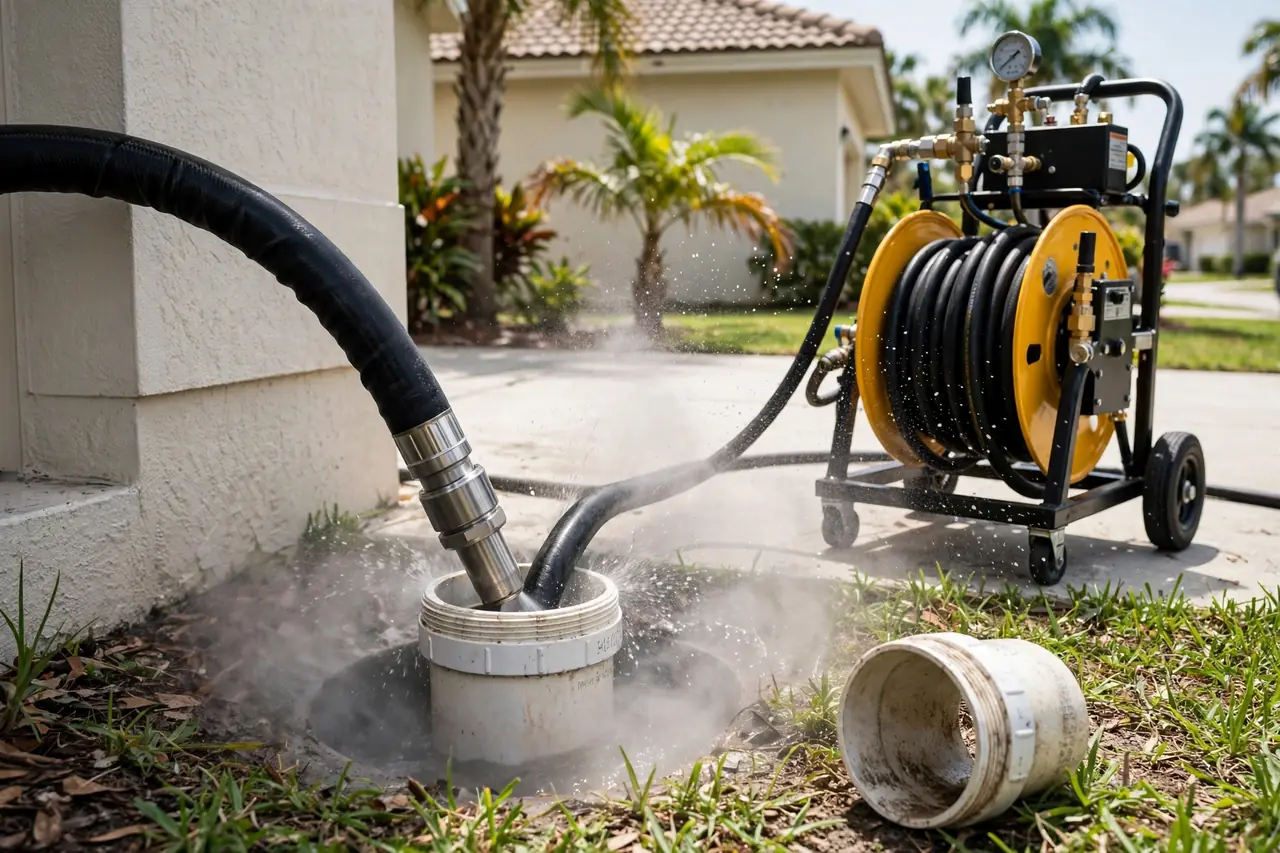
Hydro jetting sends water through the pipe at high pressure, thousands of PSI, through a specialized nozzle that fires jets backward as well as forward. The forward jets break up the blockage; the backward jets scour the pipe walls and pull the nozzle through the line. The result is not a punched hole but a cleaned pipe: scale stripped from cast iron, grease emulsified off the walls, sand flushed out of bellies, roots shredded and washed downstream.
The difference is visible on camera. A snaked pipe shows a clear channel through a dirty pipe. A jetted pipe shows clean walls, full diameter restored, joints visible and inspectable. That is why jetting is the standard prep step before a camera inspection on a dirty line and before any trenchless repair, you cannot diagnose or line a pipe you cannot see, and you cannot see through scale and grease.
Why Jetting Costs More, and When It Is Worth It
Jetting requires more equipment, more water, more skill, and more time than snaking, and it is priced accordingly. It earns the difference whenever the pipe walls are the problem rather than a single plug: whole-lateral scale, grease coating the full run, sand beds in bellies, root masses at multiple joints. For Sarasota's aging cast-iron and clay laterals, where the walls are almost always part of the problem, hydro jetting is frequently the right first move rather than the expensive alternative.
Scenario 1: Grease Buildup
Grease is the kitchen's gift to the sewer line. Hot grease goes down the drain liquid, cools in the lateral, and plates the pipe walls in layers that narrow the pipe year after year. In Sarasota's slab homes, where the kitchen line runs under the slab in cast iron before joining the lateral, grease and internal scale combine into a nearly waterproof narrowing that no chemical treatment touches.
A snake bores a hole through a grease restriction and the grease closes back around it within weeks, grease is self-healing. Jetting emulsifies grease off the walls with hot, high-pressure water and flushes it out of the system entirely. For grease, this is not a close contest: jetting wins outright, and snaking a grease line is the definition of a temporary fix. The lasting answer, of course, is keeping grease out of the drain, but the pipe you have today needs jetting, not another snake.
Scenario 2: Cast-Iron Scale
Internal scale is the signature affliction of Sarasota's 1960s to 80s cast-iron laterals. Decades of flow deposit minerals and corrosion products on the pipe walls, building rough ridges that catch debris and narrow the bore. A scaled cast-iron lateral can lose half its diameter to scale while the pipe itself remains structurally standing, a pipe that is technically intact and functionally choked.
Snaking scale is nearly pointless: the cable rattles through the narrowed bore without removing the ridges, and sometimes it cannot pass at all. Jetting strips scale from the walls and restores the bore, often dramatically, with homeowners reporting drains they had not seen run freely in years. But jetting has a limit here too: it removes the scale, not the corrosion. A cast-iron pipe whose walls are thin and flaking is a pipe approaching structural failure, and no amount of cleaning changes that. When the camera shows paper-thin walls under the scale, the conversation moves from clearing to sewer line replacement.
The Gulf Gate Lateral, Visualized
Picture the classic Gulf Gate lateral: cast-iron pipe under slab since the 1970s, clay joints to the street, forty-plus years of scale inside. The snake has visited twice. The jetter visits once, strips the walls clean, and the camera finally shows the truth, the scale was hiding corrosion, and the corrosion is the real problem. This is the most common jetting outcome on old cast iron: the cleaning works perfectly, and what it reveals is a pipe that needs replacing. That is not a failure of jetting. That is jetting doing its diagnostic job.
Scenario 3: Sand in the Line
Sand infiltration is Sarasota's regional specialty. Myakka fine sand enters laterals through cracks and separated joints whenever the water table rises or a storm pushes it in, and it settles in bellies and low sections where flow cannot carry it out. A sand bed narrows the pipe from the bottom up and abrades the walls with every flush.
A snake is nearly useless against sand: the cable stirs the bed without removing it, and the channel it opens fills back in within days. Jetting flushes sand out of the line completely, the high-volume flow carries the bed downstream and out. But the honest follow-up question is always where the sand entered. Sand in the line means a crack or separated joint, and until that opening is repaired, the next high-water event delivers a fresh load. Jetting plus a camera inspection is the complete answer: clean the sand, find the entry, fix the entry.
Scenario 4: Tree Roots
Roots enter through joints and cracks seeking the moisture inside the pipe, and mature live oaks and ficus trees, Sarasota's signature shade, are persistent about it. A root mass in a lateral is a living blockage: it grows back. Snaking cuts the roots at the joint and the roots return within the season, often thicker. This is the treadmill pattern Sarasota homeowners know well: clear in spring, blocked by fall.
Jetting shreds root masses far more thoroughly than a snake, cutting them flush to the pipe wall and flushing the debris out. But jetting does not close the entry point either. Roots plus a cracked joint is a two-part problem, the roots are the symptom, the crack is the disease. Tree root removal addresses the intrusion, and the lasting fix is repairing the joint the roots came through, whether by lining, bursting, or spot repair. Any contractor who sells root clearing without discussing the entry crack is selling you a subscription.
When Clearing Is Not Enough
Here is the honest bottom line both tools share: clearing treats blockages, and some pipes do not have a blockage problem, they have a pipe problem. Collapsed sections, separated joints, bellies full of standing water, corroded-through cast iron: no clearing method fixes these, because there is nothing to clear. The rule from our signs of sewer failure post applies: if the same line has been cleared twice in twelve months, stop clearing and start diagnosing. A camera inspection turns the clearing treadmill into a repair plan, and a repaired pipe never needs clearing again. Call (941) 344-0088.
Published 2026-10-09 · Sarasota Sewer Specialists
Related Sewer Services
Hydro Jetting
Hydro jetting in Sarasota, FL clears grease, scale, and sand with pressurized water. Camera inspection first. …
Learn more →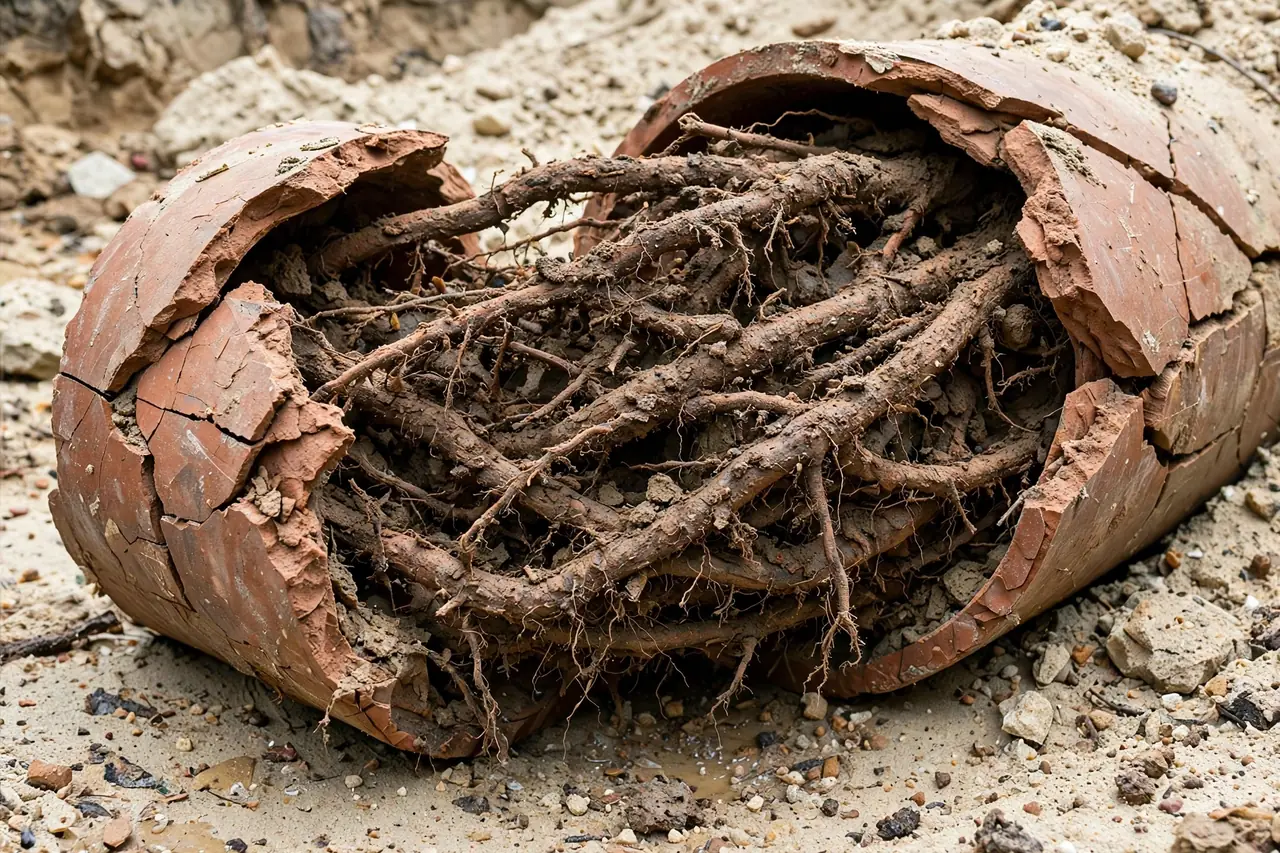
Tree Root Removal
Tree root removal for Sarasota sewer lines: cutting, jetting, and camera verification for live oak and ficus r…
Learn more →Nearby Service Areas
Frequently Asked Questions
Which is better: hydro jetting or snaking?
Neither, they do different jobs. Snaking punches through a blockage; jetting cleans the pipe walls. For a simple soft clog near a fixture, a snake is the right tool. For scale, grease, sand, or roots throughout a lateral, jetting is the right tool. A contractor who only owns one will recommend it for everything; ask what the camera showed.
Can snaking damage my sewer line?
Yes. Snaking a line with separated joints or a collapsed section can push the cable through the break and into the surrounding soil, making the damage worse. This is why a camera inspection should come before aggressive clearing on any line with a history of repeat blockages, you need to know the pipe is intact before you send steel through it.
Is hydro jetting safe for the environment and my yard?
Hydro jetting uses only water, no chemicals, so it is safe for landscaping and the environment. The water used is substantial but the alternative, repeated chemical treatments or excavation, is worse. For homes on septic, jetting the line to the tank is routine; jetting inside a drainfield is a different question your contractor should answer first.
My line keeps clogging every few months even after clearing. Why?
That pattern, clear, return, clear, return, is the signature of a structural problem. Roots regrow through the same cracked joint; scale rebuilds on the same rough walls; sand re-enters through the same crack. After two clearings in a year, stop clearing and get a camera in the line. The footage will show what clearing cannot fix.
If my pipe needs replacement anyway, is jetting a waste of money?
Not necessarily. Jetting is the correct prep step before pipe lining or pipe bursting, the pipe has to be clean for the repair to hold. Jetting a line that is about to be replaced is not wasted money; it is what makes the replacement possible. Ask your contractor to explain the sequence before you approve it.